
Facial Recognition in Stadium Entry Systems: Hardware Defines Throughput, AI Enhances Efficiency
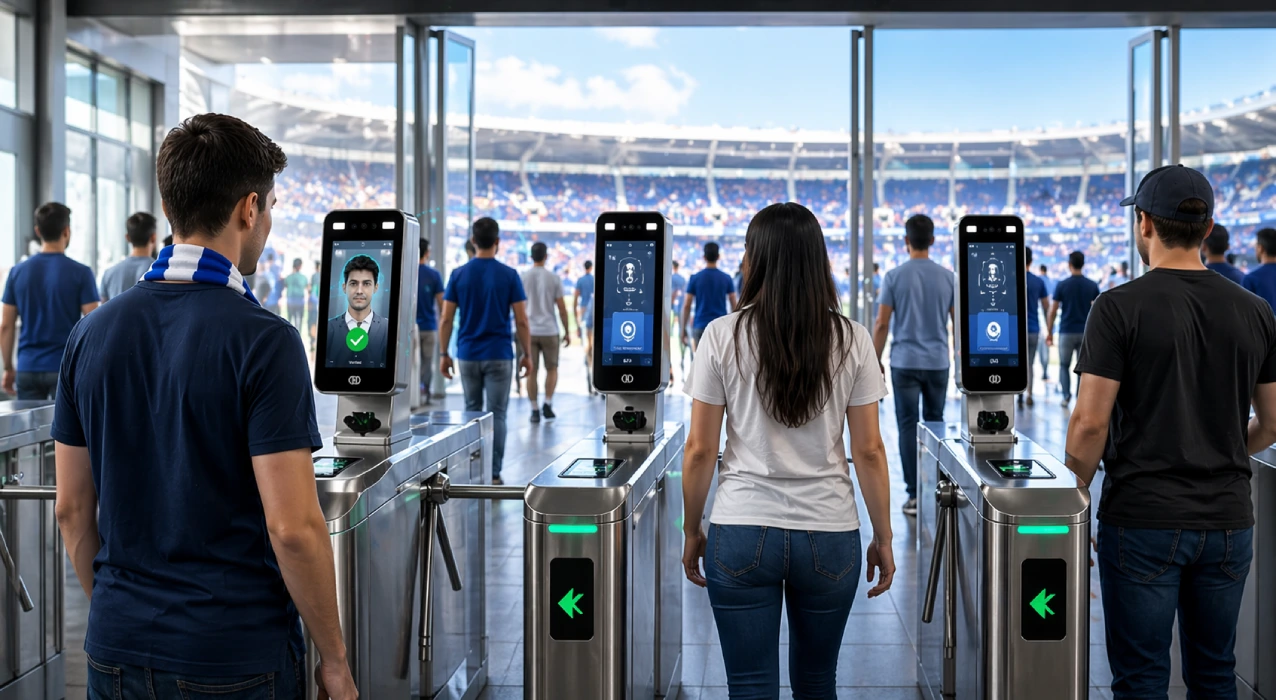
Matchday Reality: Peak Pressure on Stadium Ticketing Systems
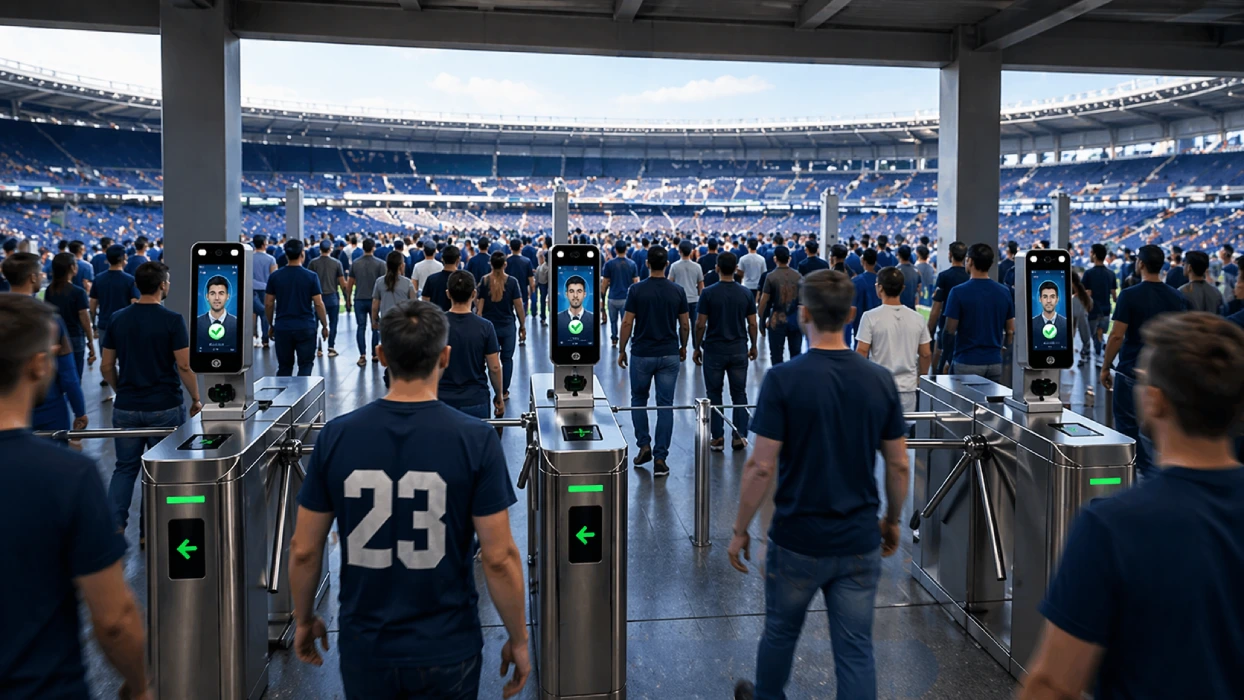
During matchday operations, facial recognition stadium ticketing demand is highly concentrated. Entry systems must handle sudden demand spikes within limited timeframes, requiring consistent performance under continuous high-frequency operation.
- Turnstiles must operate continuously without interruption
- Devices must perform repeated recognition at high frequency
- Any delay or inconsistency is immediately amplified
Even a small increase in per-user processing time can lead to significant queue buildup when scaled across thousands of spectators.
Industry Shift: Facial Recognition Stadium Ticketing Becomes Standard
As global sports events continue to grow, stadiums are expected to handle larger audiences while maintaining higher standards of safety and user experience. Modern venues are under pressure to deliver faster throughput, more secure identity verification, and consistent performance during peak entry periods.
As a result, facial recognition stadium ticketing systems are replacing traditional validation methods, enabling identity-based access control supported by reliable hardware infrastructure.
Real-World Adoption in Leading Stadiums
Biometric entry technologies have already been introduced in several leading stadiums. Tottenham Hotspur Stadium in the UK has implemented advanced digital infrastructure, including contactless and biometric-based access systems, to support high-capacity matchday operations. In Europe, Juventus at Allianz Stadium has explored identity-based access technologies as part of its smart stadium strategy, focusing on both entry efficiency and security. Manchester City’s Etihad Stadium has also been developing digital entry solutions to improve fan experience and operational control.
These developments highlight a clear industry direction: entry performance increasingly depends on reliable hardware capable of supporting real-time identity verification at scale.
Why Hardware Determines Facial Recognition Stadium Ticketing Performance
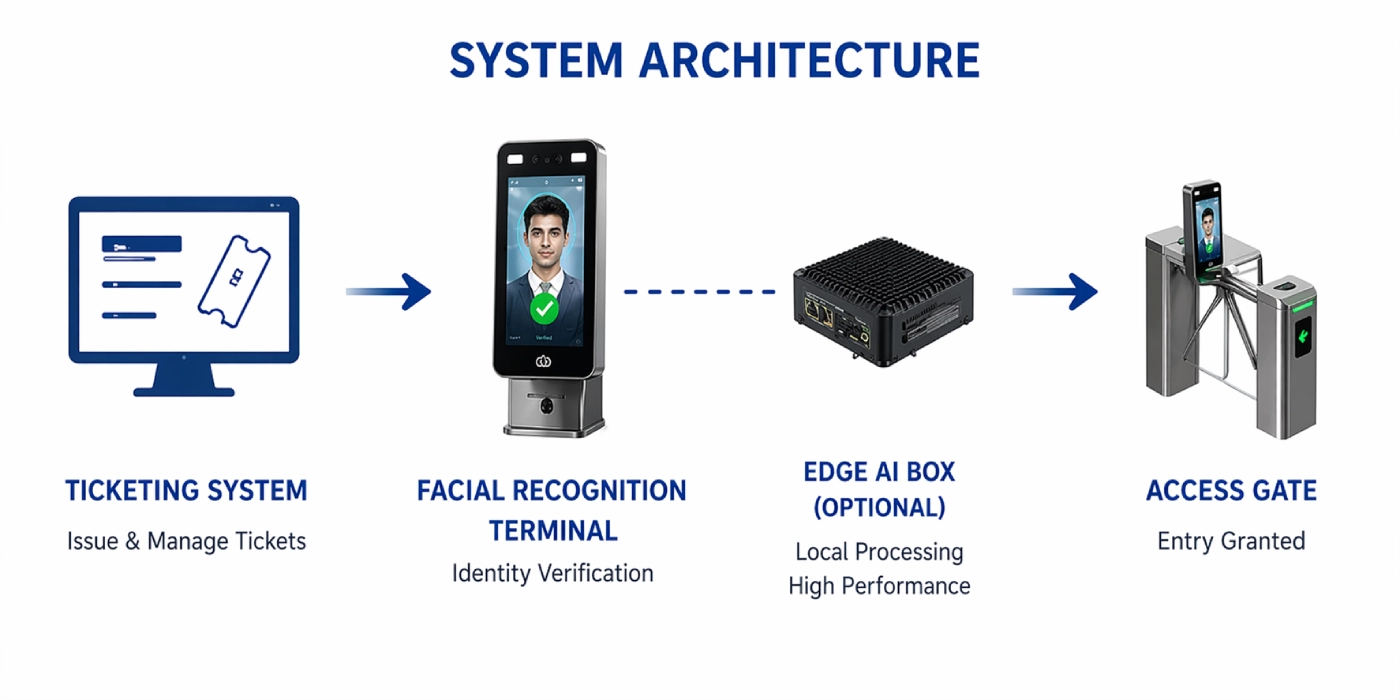
In high-density environments, overall system performance is limited by the execution layer. Even if backend systems are optimized, entry throughput will degrade if terminal devices cannot maintain consistent recognition speed, operate reliably under continuous load, or respond instantly to access control signals.
This is This is why hardware selection remains a critical factor in premium facial recognition terminal deployment for stadium ticketing scenarios.
AI as an Enhancement Layer
While hardware defines execution reliability, edge AI computing can further enhance system intelligence and processing efficiency. With the support of local AI inference, facial recognition systems can achieve faster identity matching, lower latency, and stronger adaptability in complex deployment environments.
This combination of reliable hardware and edge AI processing helps build modern high-throughput stadium entry systems that are more scalable and more responsive under peak pressure.
FA8: A Hardware Platform for Facial Recognition Stadium Ticketing
1. Stable Performance Under Continuous Operation
FA8 facial recognition terminal is designed to maintain consistent recognition performance under high-frequency usage, helping ensure stable throughput during peak entry periods.
2. Environmental Adaptability
Stadium environments often involve changing lighting conditions and semi-outdoor or outdoor exposure. FA8 operates reliably across different environments, reducing performance fluctuation during real-world use.
3. Integration-Ready Design
FA8 supports integration with turnstile systems and ticketing platforms, making deployment easier within existing stadium infrastructure.
4. Customization for Real-World Projects
Every stadium project has different infrastructure and workflow requirements. As a hardware manufacturer, SUNTEK provides customization capabilities including hardware configuration and mounting options, interface and protocol adaptation, and workflow-level functional customization.
When combined with edge AI computing, FA8 can further enhance recognition efficiency and system responsiveness in large-scale deployments.
Manufacturing Strength and Reliability
SUNTEK focuses on delivering commercial-grade hardware terminals designed for long-term operation in demanding environments. This ensures stable deployment of facial recognition stadium ticketing systems at scale.
Operational Impact: Measurable Efficiency Improvement
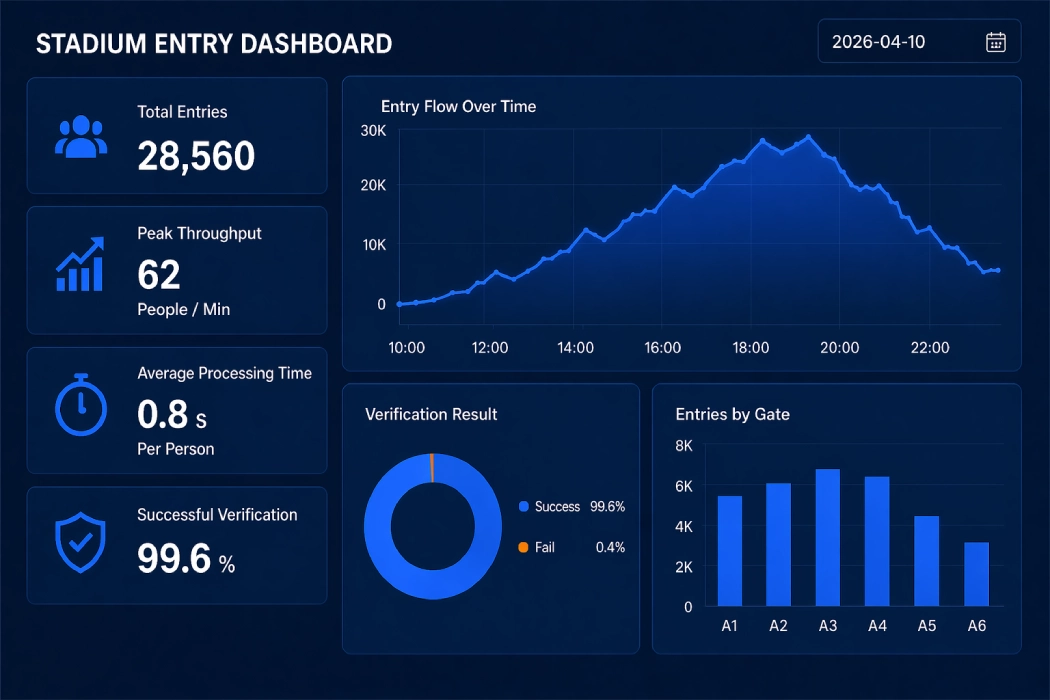
Improving entry efficiency has a direct impact on stadium operations. Reducing even one second per person in processing time can result in shorter queues, faster completion of entry before kickoff, and a smoother overall fan experience.
Conclusion
In modern stadium environments, facial recognition stadium ticketing systems must deliver consistent performance under peak-load conditions. Facial recognition provides an efficient identity verification method, while hardware reliability determines real-world execution performance.
For a broader view of how identity verification integrates with ticketing workflows, see our guide to facial recognition ticketing systems.
相关新闻
-
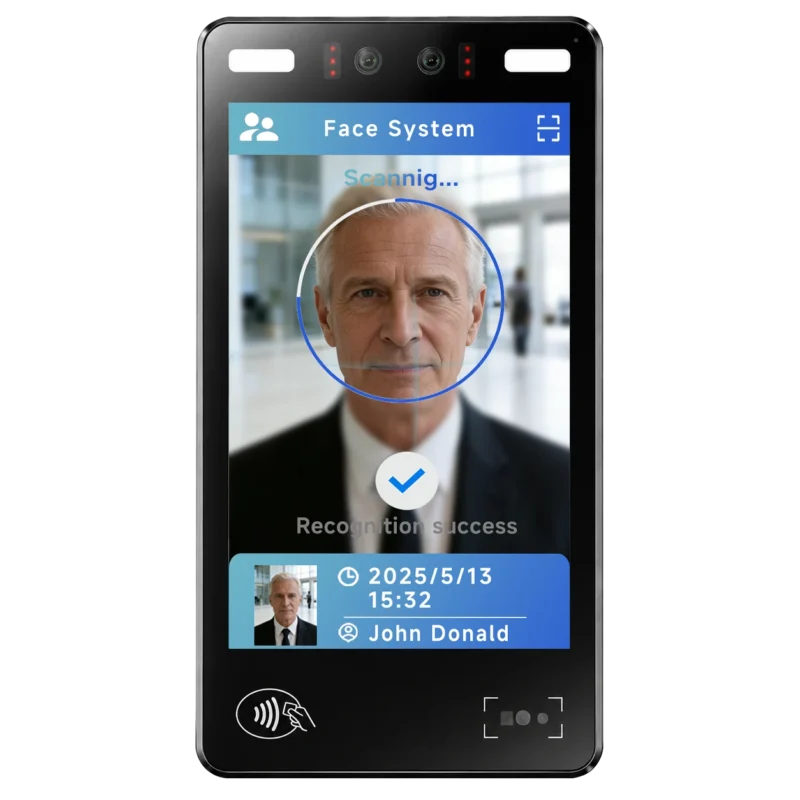
FA10 10.1-Inch AI Facial Recognition Terminal for Smart Access
SUNTEK FA10 10.1-inch AI facial recognition terminal is designed for smart access control, visitor management, attendance, and self-service applicatio…
-
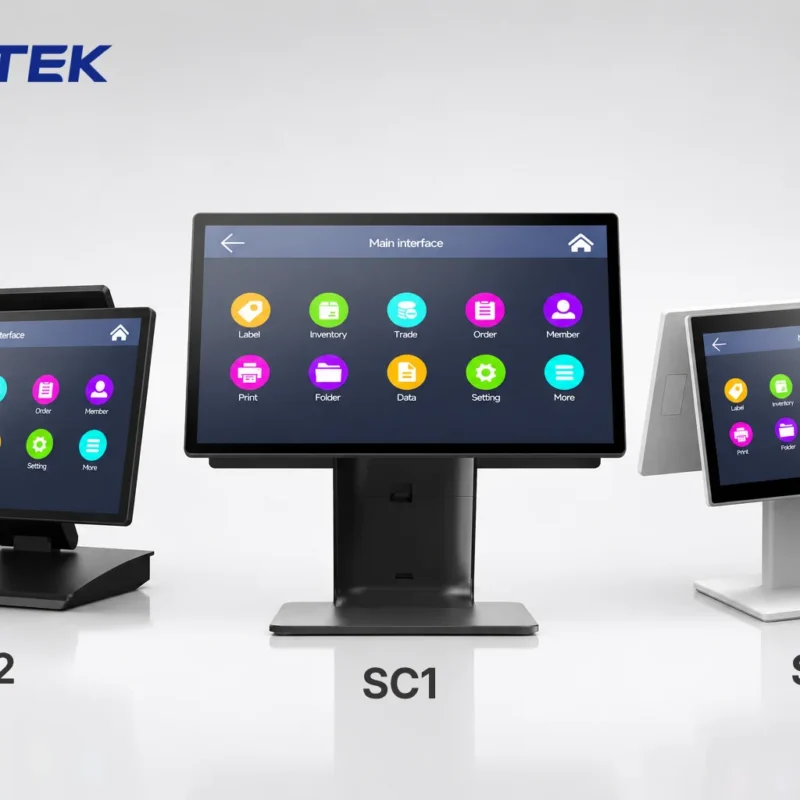
How to Choose the Right POS Terminal: SC1 vs SC2 vs SC6
Selecting the right POS terminal depends on your software requirements, hardware expectations and deployment environment. This guide compares SUNTEK S…
-
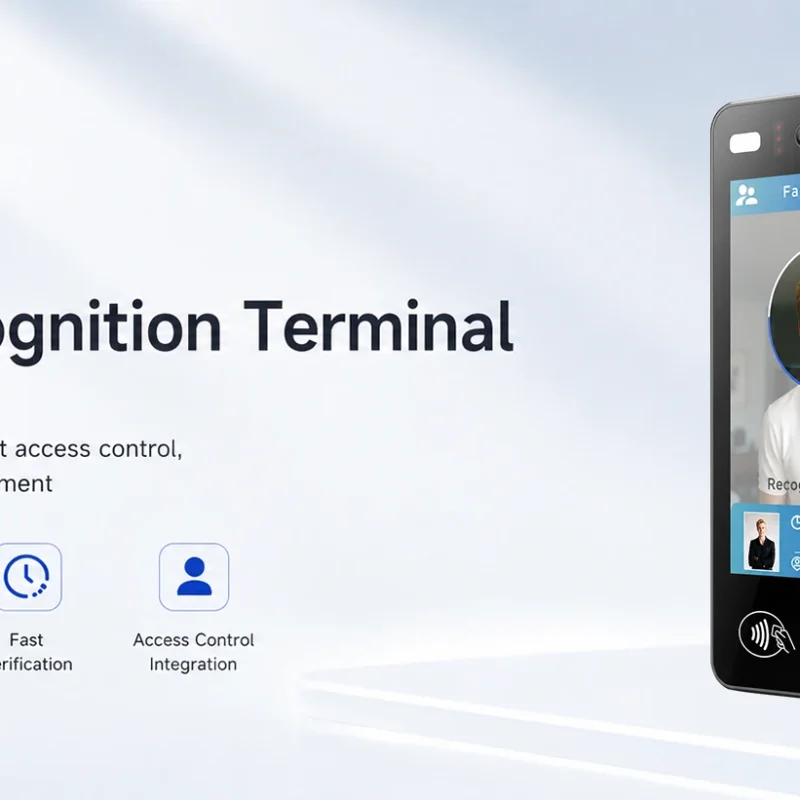
Updated FA8 Facial Recognition Terminal
SUNTEK has updated the FA8 8-inch Android facial recognition terminal with a more refined exterior design, a revised interface configuration, and stro…
-
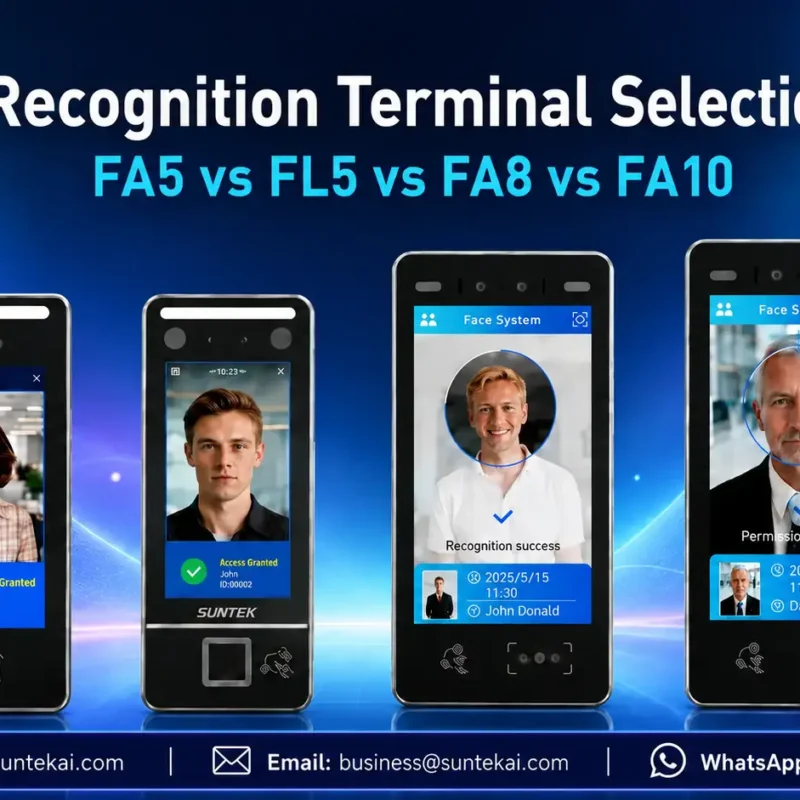
Facial Recognition Terminal Selection Guide: FA5 vs FL5 vs FA8 vs FA10
This guide compares SUNTEK FA5, FL5, FA8, and FA10 to help you choose the right facial recognition terminal for your project. Which SUNTEK Facial Reco…
-
Check-In Kiosk Hardware for Healthcare Self-Service
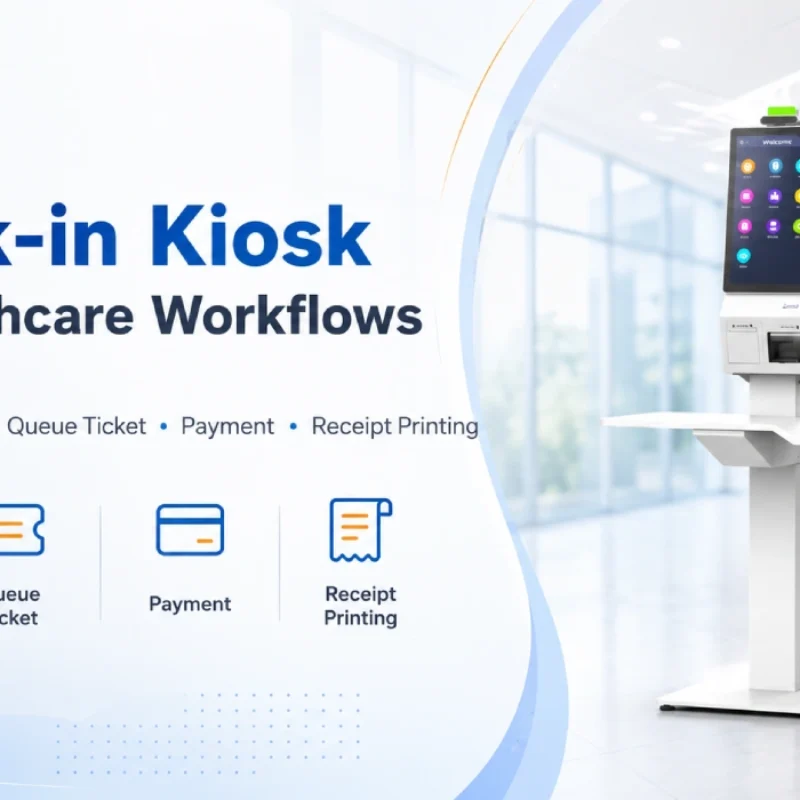
A check-in kiosk helps healthcare facilities move repetitive front-desk tasks into a guided self-service registration workflow. This article explains how check-in kiosks support appointment confirmation, information entry, queue ticket printing, payment, receipt printing, and optional verification, while also outlining key hardware modules and deployment considerations for hospitals, clinics, and outpatient care centers.
-
Cloud Printer for Online Food Orders: How Restaurants Keep Delivery Orders Moving
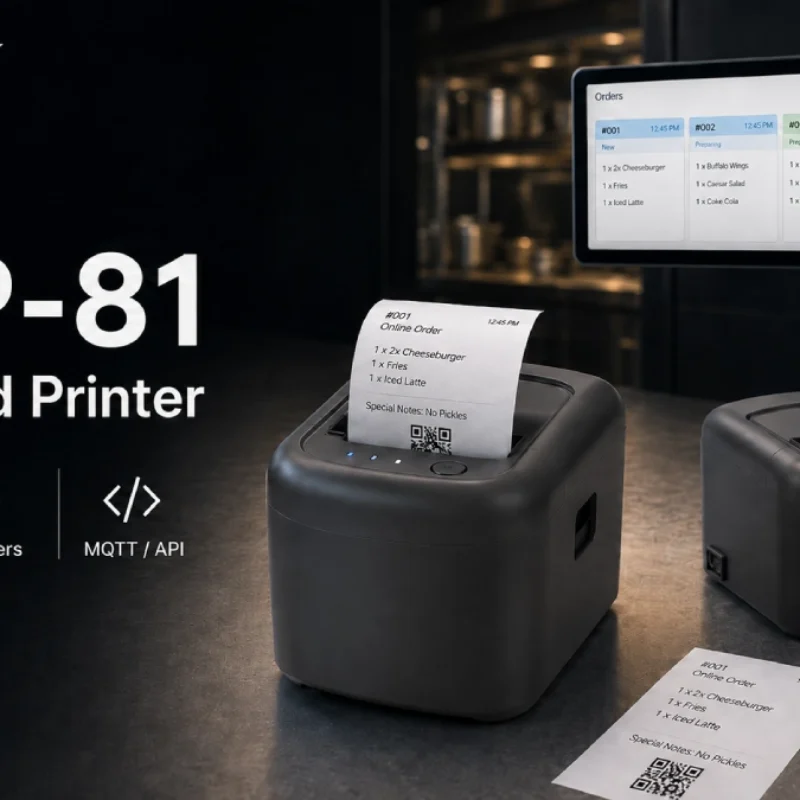
Online food orders are changing how restaurants manage kitchen, packing, and delivery workflows. This article explains how cloud printers and KDS hardware help restaurants print order tickets, improve kitchen visibility, reduce missed orders, and build a more reliable online food order workflow.
-
Compact Self-Service Kiosk for Chain Store Projects
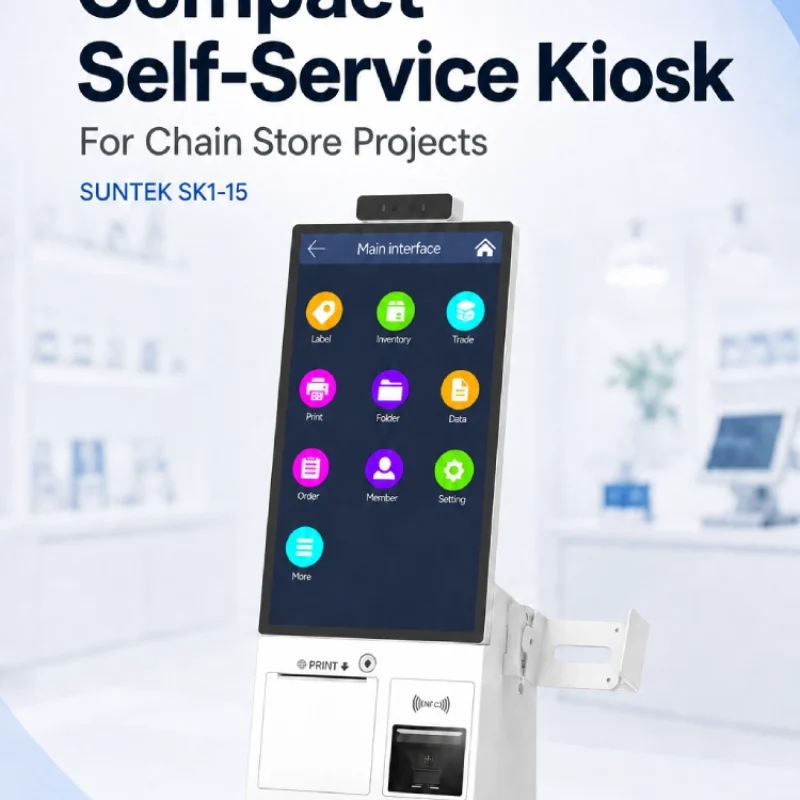
SUNTEK SK1-15 is a compact self-service kiosk designed for chain store projects, solution providers, and system integrators. This article explains how SK1-15 supports POS holder installation, SoftPOS-ready NFC configurations, QR code scanning, magnetic stripe card reader options, face camera support, and external fingerprint module integration for front-counter service, payment, identification, and multi-store rollout workflows.
-
Multimodal Biometrics in Access Control After ID4Africa 2026
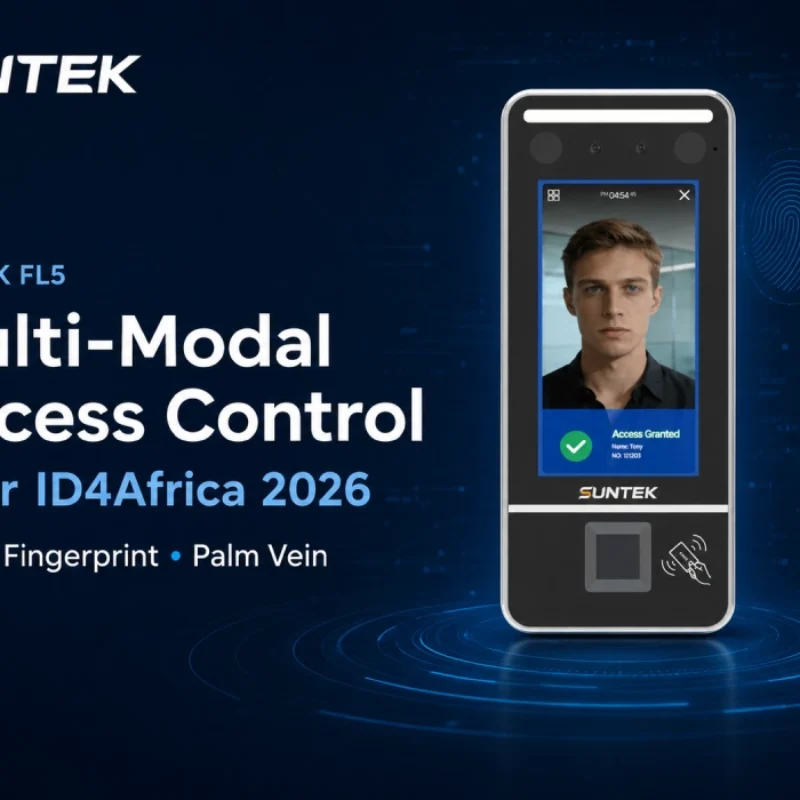
This article explores how ID4Africa 2026 reflects the growing importance of multimodal biometrics in access control. It explains why face recognition, fingerprint verification, and palm vein recognition are becoming more relevant for offices, hospitals, schools, government buildings, and secure indoor areas, with SUNTEK FL5 as a hardware example.
-

What NRA Show 2026 Reveals About Restaurant Technology Trends
As NRA Show 2026 opens in Chicago, restaurant operators are paying closer attention to practical technology that improves ordering, payment, kitchen workflows and device management. From SUNTEK’s hardware manufacturer perspective, the key trend is clear: restaurant digitalization is moving from isolated software tools to connected hardware systems, including POS terminals, self-service kiosks, cloud printers, SoftPOS-ready devices and remote management platforms.
-
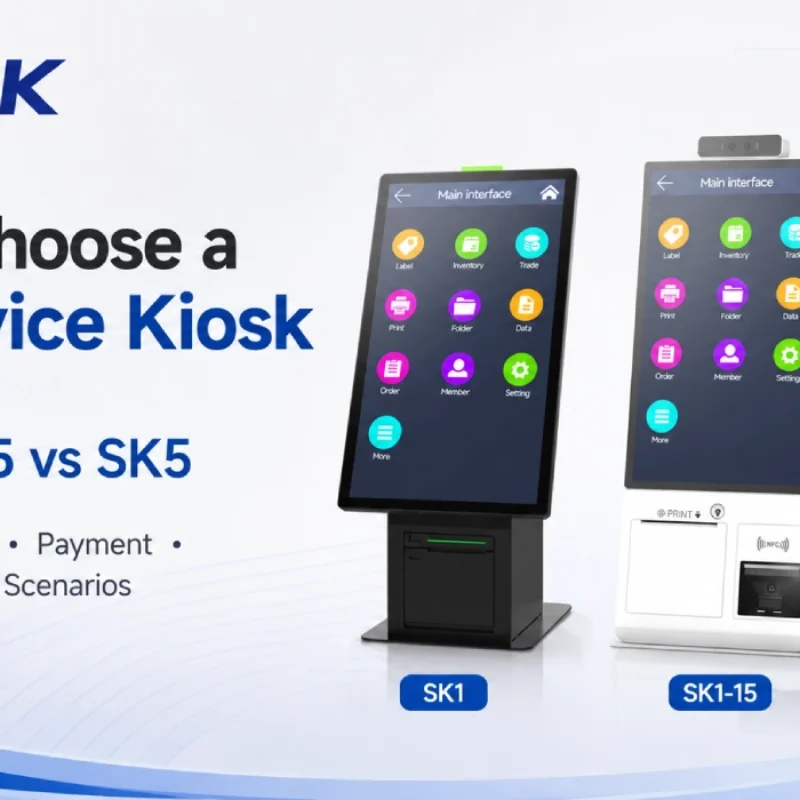
How to Choose a Self-Service Kiosk: SK1 vs SK1-15 vs SK5
Compare SUNTEK SK1, SK1-15, and SK5 self-service kiosks by installation type, SoftPOS support, information kiosk use, payment, printing, scanning, and project scenarios.