
SoftPOS Europe: Adoption & Compliance Trends
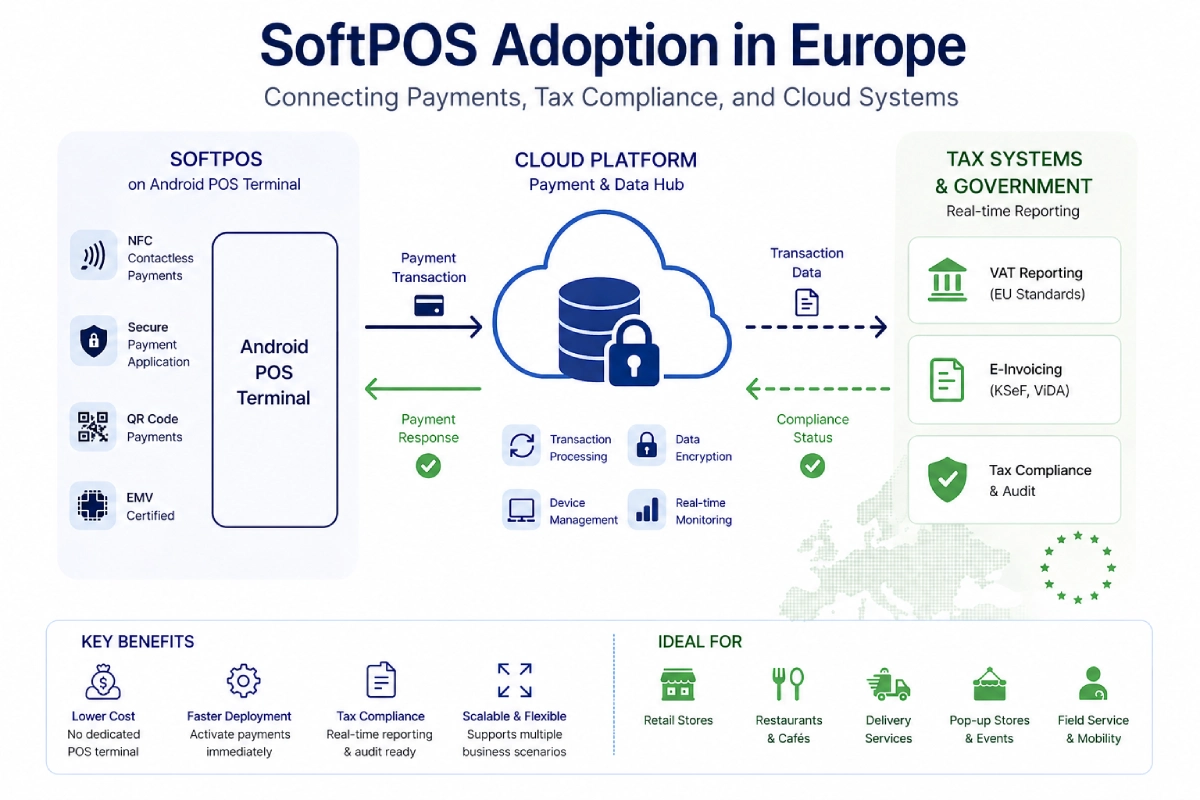
Why SoftPOS Is Rising in Europe
Definition: SoftPOS adoption refers to the shift from hardware-based payment terminals to software-based payment acceptance on Android devices.
1. Tax Compliance Is Driving the Shift
European tax systems are moving toward real-time or near real-time reporting. Frameworks such as VAT digitalization, Poland’s KSeF, and EU ViDA require transaction data to be transmitted to government platforms.
The European Commission’s VAT in the Digital Age package is designed to modernize the EU VAT system, improve business efficiency, and strengthen fraud resistance. The Council of the European Union also confirmed the formal adoption of the ViDA package in 2025.
This changes the role of POS systems. Instead of storing data locally, POS systems must now act as connected endpoints within tax reporting networks.
Conclusion: SoftPOS adoption is driven by tax system requirements rather than payment trends.
2. Lower Cost and Faster Deployment
SoftPOS eliminates the need for dedicated payment terminals, reducing hardware investment and simplifying deployment. Businesses can activate payment capabilities on existing Android devices without installation or infrastructure changes.
This is particularly valuable for small businesses, temporary operations, and multi-location deployments. It also makes Android POS hardware more important, because the device must still provide stable connectivity, secure system operation, and reliable daily performance.
Conclusion: SoftPOS reduces entry barriers and accelerates deployment across European markets.
3. Changing Business Scenarios
Retail and service environments in Europe are becoming more mobile and decentralized. Delivery services, pop-up stores, and field operations require flexible payment solutions that traditional POS systems cannot always support.
Conclusion: SoftPOS aligns with the growing demand for mobility and flexible operations.
What European Businesses Actually Need
Definition: In Europe, POS system selection is increasingly driven by compliance and integration requirements rather than hardware specifications.
Businesses are no longer choosing POS systems based on screen size or processing power. Instead, the key requirements include:
- Integration with tax platforms such as KSeF, TSE, and VAT systems
- Support for real-time data reporting
- Compatibility with cloud-based systems
- Ability to update compliance rules through software
Poland’s KSeF e-invoicing system is a clear example of this shift. It shows how POS, invoicing, and tax reporting are becoming more connected through national digital platforms.
In this context, SoftPOS is not a standalone solution, but part of a broader system architecture.
Conclusion: The European POS market is shifting from hardware-driven decisions to system-level integration.
SoftPOS vs Traditional POS: Why Both Still Matter
Definition: SoftPOS and traditional POS systems serve different roles within modern retail and service environments.
SoftPOS offers flexibility and low-cost deployment, while traditional POS systems provide stability, integration, and full operational support. For fixed checkout counters, a desktop POS terminal is still important when businesses need larger screens, peripheral connections, receipt printing, scanner integration, and stable cashier workflows.
| Aspect | SoftPOS | Traditional POS |
|---|---|---|
| Deployment | Fast, software-based | Hardware installation required |
| Flexibility | High | Moderate |
| Compliance | Cloud-integrated | Device or hybrid-based |
| Use Case | Mobile / lightweight | Retail / high-volume |
Rather than replacing traditional systems, SoftPOS complements them in scenarios where flexibility is required.
Conclusion: SoftPOS and traditional POS systems are increasingly deployed together in Europe.
What SoftPOS Means for Hardware Manufacturers
Definition: The rise of SoftPOS is changing the role of hardware manufacturers from device suppliers to system enablers.
1. SoftPOS-Ready Hardware Is Becoming Standard
Devices must support NFC, secure Android environments, and certification for payment applications.
2. Integration Capability Is Critical
Hardware must connect with payment platforms, tax systems, and cloud services through APIs and middleware. In self-service retail scenarios, a self checkout terminal can also become part of the connected payment and reporting workflow, especially when QR payment, SoftPOS, receipt printing, and cloud-based order systems need to work together.
3. Lifecycle and Upgradeability
As compliance requirements evolve, hardware must support OTA updates and long-term software compatibility.
Conclusion: Hardware manufacturers must focus on platform compatibility rather than standalone device performance.
SoftPOS Within the European POS System Landscape
SoftPOS is only one part of the broader POS system architecture required in Europe.
For a complete overview of POS system requirements, see: POS System Requirements in Europe.
Conclusion: Understanding SoftPOS requires understanding the full compliance and system context.
FAQ: SoftPOS Adoption in Europe
Why is SoftPOS adoption growing in Europe?
SoftPOS adoption is growing in Europe because businesses need more flexible payment acceptance, lower deployment costs, and better integration with digital tax reporting systems. As VAT compliance, e-invoicing, and real-time reporting become more important, SoftPOS helps connect payment acceptance with cloud-based business systems.
Is SoftPOS replacing traditional POS terminals?
No. SoftPOS is not fully replacing traditional POS terminals. It is mainly used for mobile, lightweight, and flexible payment scenarios. Traditional POS terminals are still important for fixed checkout counters, receipt printing, peripheral connections, and high-volume retail operations.
What kind of hardware is needed for SoftPOS?
SoftPOS usually requires an Android device with NFC support, secure software environment, stable network connectivity, and compatibility with certified payment applications. For business use, a SoftPOS-ready Android POS terminal is often more reliable than a general consumer device.
How is SoftPOS related to tax compliance in Europe?
SoftPOS is related to tax compliance because payment systems increasingly need to connect with invoicing, VAT reporting, and cloud-based tax platforms. In Europe, digital tax frameworks such as ViDA and national e-invoicing systems are pushing POS systems toward more connected and software-driven architectures.
Can SoftPOS work with self-service checkout systems?
Yes. SoftPOS can work with self-service checkout systems when payment apps, QR payment, receipt printing, and cloud-based order systems are properly integrated. In these scenarios, a self checkout terminal can become part of a connected retail payment and reporting workflow.
Choosing the Right POS Strategy for Europe
Businesses operating in Europe need to balance flexibility, compliance, and system integration when selecting POS solutions.
SUNTEK provides Android POS systems and SoftPOS-ready hardware designed for European tax compliance and payment scenarios.
For POS hardware selection, SoftPOS-ready Android terminal projects, or European deployment requirements, contact SUNTEK for POS hardware projects.
相关新闻
-
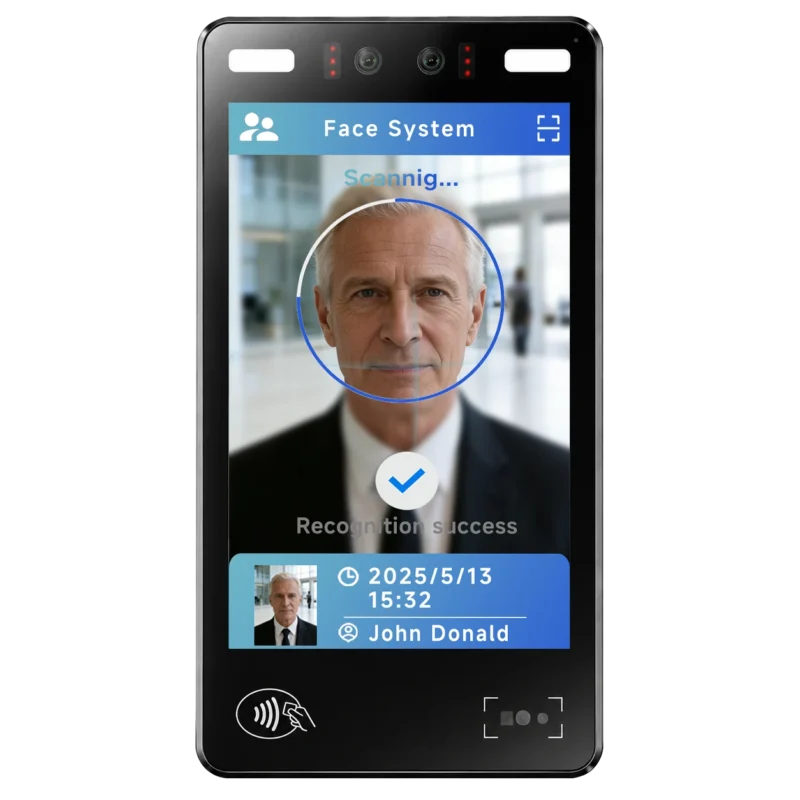
FA10 10.1-Inch AI Facial Recognition Terminal for Smart Access
SUNTEK FA10 10.1-inch AI facial recognition terminal is designed for smart access control, visitor management, attendance, and self-service applicatio…
-
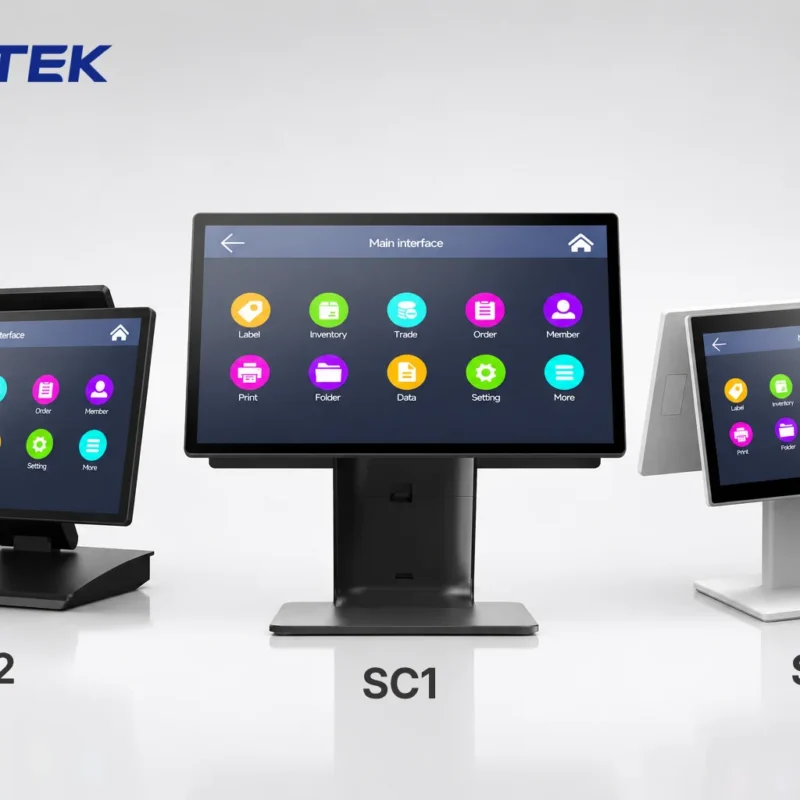
How to Choose the Right POS Terminal: SC1 vs SC2 vs SC6
Selecting the right POS terminal depends on your software requirements, hardware expectations and deployment environment. This guide compares SUNTEK S…
-
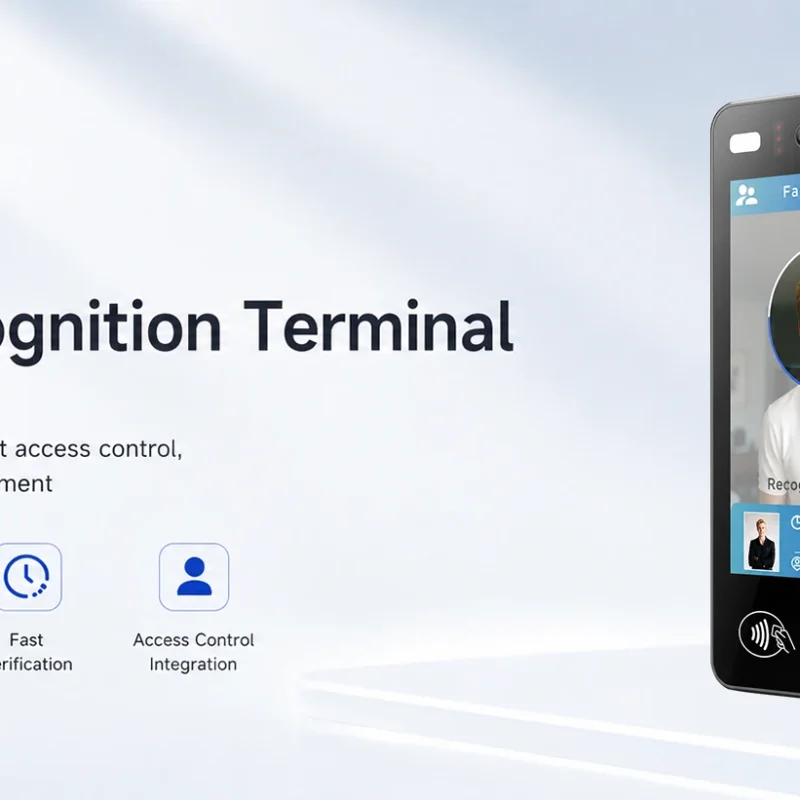
Updated FA8 Facial Recognition Terminal
SUNTEK has updated the FA8 8-inch Android facial recognition terminal with a more refined exterior design, a revised interface configuration, and stro…
-
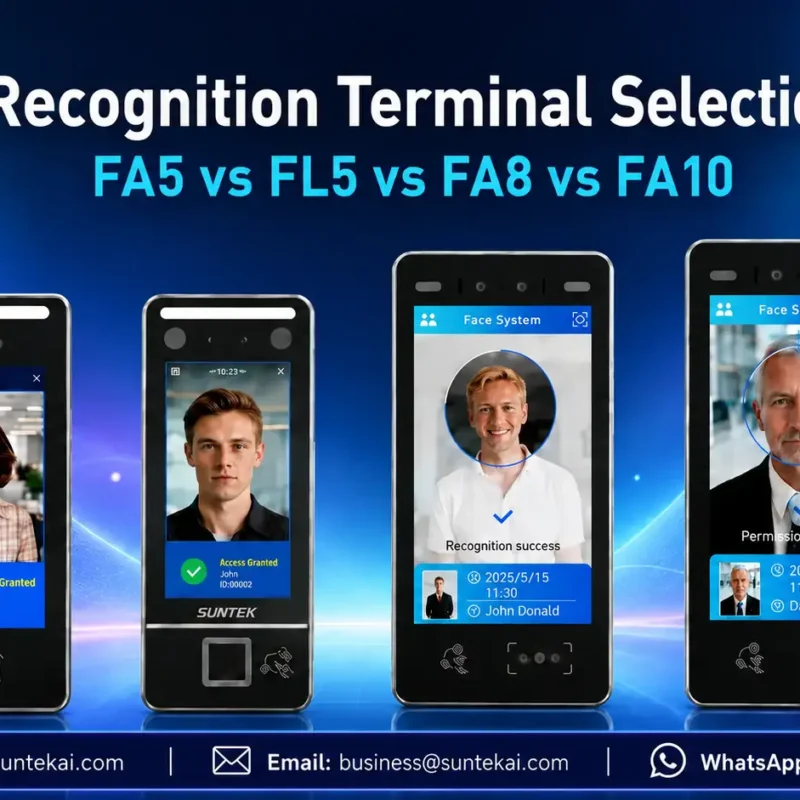
Facial Recognition Terminal Selection Guide: FA5 vs FL5 vs FA8 vs FA10
This guide compares SUNTEK FA5, FL5, FA8, and FA10 to help you choose the right facial recognition terminal for your project. Which SUNTEK Facial Reco…
-
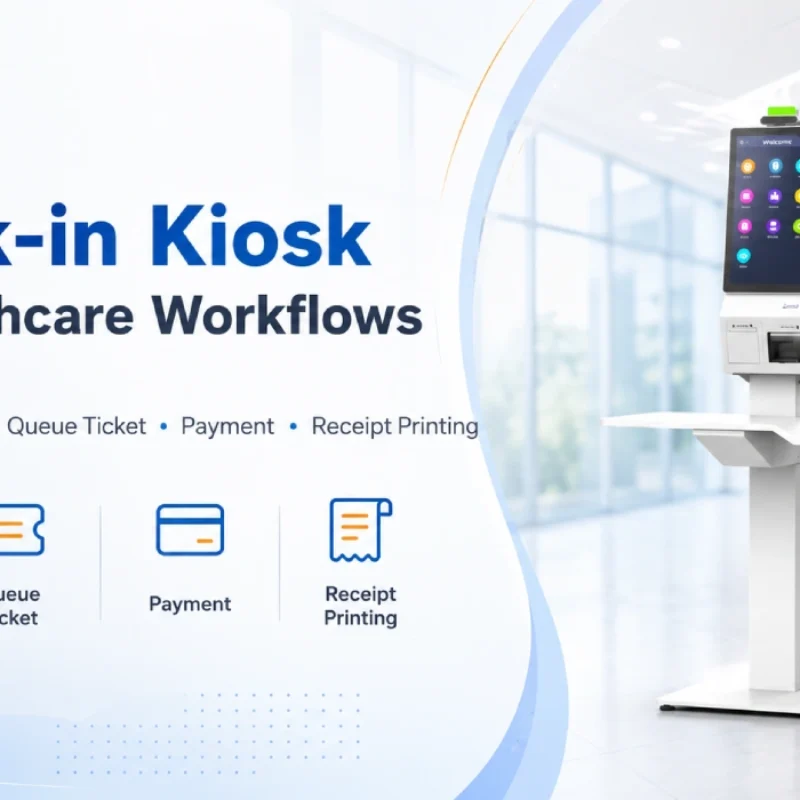
Check-In Kiosk Hardware for Healthcare Self-Service
A check-in kiosk helps healthcare facilities move repetitive front-desk tasks into a guided self-service registration workflow. This article explains how check-in kiosks support appointment confirmation, information entry, queue ticket printing, payment, receipt printing, and optional verification, while also outlining key hardware modules and deployment considerations for hospitals, clinics, and outpatient care centers.
-
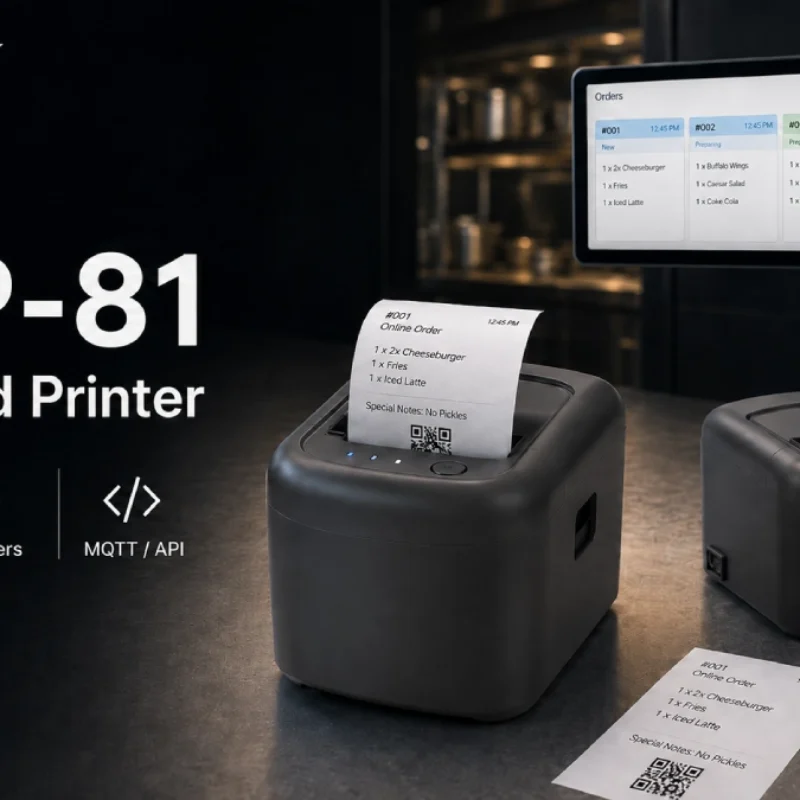
Cloud Printer for Online Food Orders: How Restaurants Keep Delivery Orders Moving
Online food orders are changing how restaurants manage kitchen, packing, and delivery workflows. This article explains how cloud printers and KDS hardware help restaurants print order tickets, improve kitchen visibility, reduce missed orders, and build a more reliable online food order workflow.
-
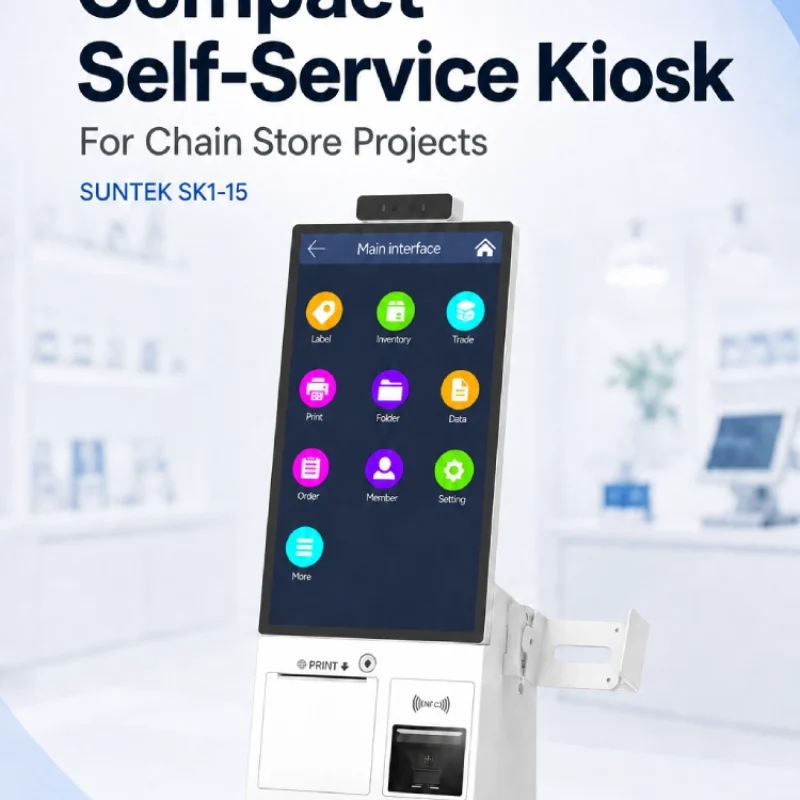
Compact Self-Service Kiosk for Chain Store Projects
SUNTEK SK1-15 is a compact self-service kiosk designed for chain store projects, solution providers, and system integrators. This article explains how SK1-15 supports POS holder installation, SoftPOS-ready NFC configurations, QR code scanning, magnetic stripe card reader options, face camera support, and external fingerprint module integration for front-counter service, payment, identification, and multi-store rollout workflows.
-
Multimodal Biometrics in Access Control After ID4Africa 2026
This article explores how ID4Africa 2026 reflects the growing importance of multimodal biometrics in access control. It explains why face recognition, fingerprint verification, and palm vein recognition are becoming more relevant for offices, hospitals, schools, government buildings, and secure indoor areas, with SUNTEK FL5 as a hardware example.
-

What NRA Show 2026 Reveals About Restaurant Technology Trends
As NRA Show 2026 opens in Chicago, restaurant operators are paying closer attention to practical technology that improves ordering, payment, kitchen workflows and device management. From SUNTEK’s hardware manufacturer perspective, the key trend is clear: restaurant digitalization is moving from isolated software tools to connected hardware systems, including POS terminals, self-service kiosks, cloud printers, SoftPOS-ready devices and remote management platforms.
-
How to Choose a Self-Service Kiosk: SK1 vs SK1-15 vs SK5
Compare SUNTEK SK1, SK1-15, and SK5 self-service kiosks by installation type, SoftPOS support, information kiosk use, payment, printing, scanning, and project scenarios.