
Facial Recognition for Football Clubs: A UK Entry Case Study
Case Study: Gillingham Football Club
This case study of Gillingham Football Club shows how the club implemented the SUNTEK FA8 facial recognition terminal to improve matchday entry efficiency.
Before the upgrade, the club relied on manual ticket checking at entry points. As more spectators arrived within a short time window before matches, entry operations faced increasing pressure in terms of throughput, staffing consistency, and ticket verification reliability.
Project Background
- Location: United Kingdom
- Scenario: Football club matchday entry
- Peak entry period: 15–30 minutes before kick-off
- Original verification method: Manual ticket checking
Challenges Before Deployment
Before deploying FA8, the club faced several practical challenges during matchday entry:
- Entry congestion during peak periods
Large numbers of fans arriving shortly before kick-off created pressure at entry points and increased queuing. - Limited throughput with manual checking
Manual ticket verification slowed entry flow and made it harder to process spectators efficiently in a short time window. - Inconsistent operational efficiency
Entry speed and verification consistency depended heavily on staff performance and on-site conditions. - Ticket misuse risk
Without identity-based verification, ticket sharing or misuse remained a challenge.
FA8 Deployment
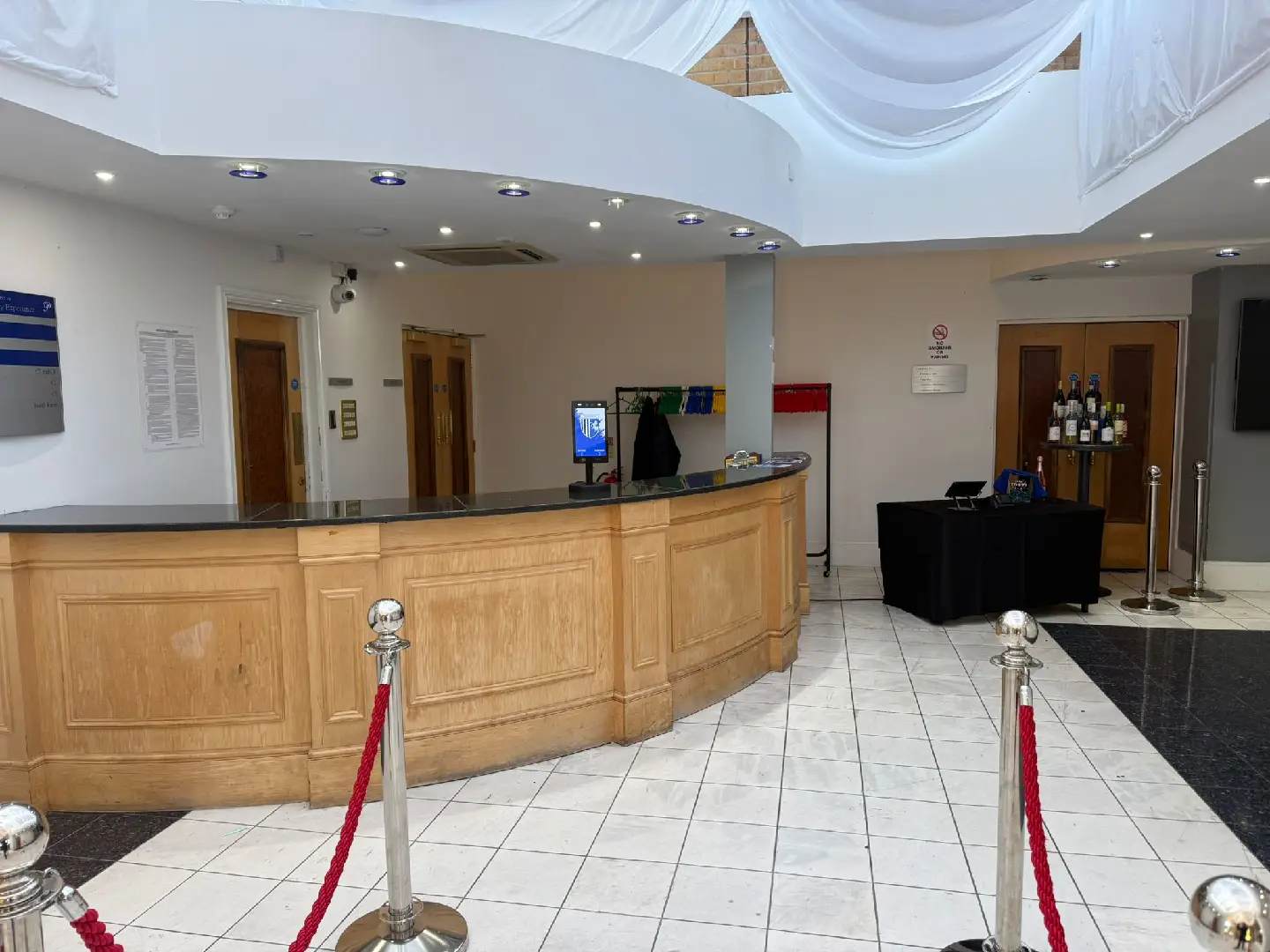
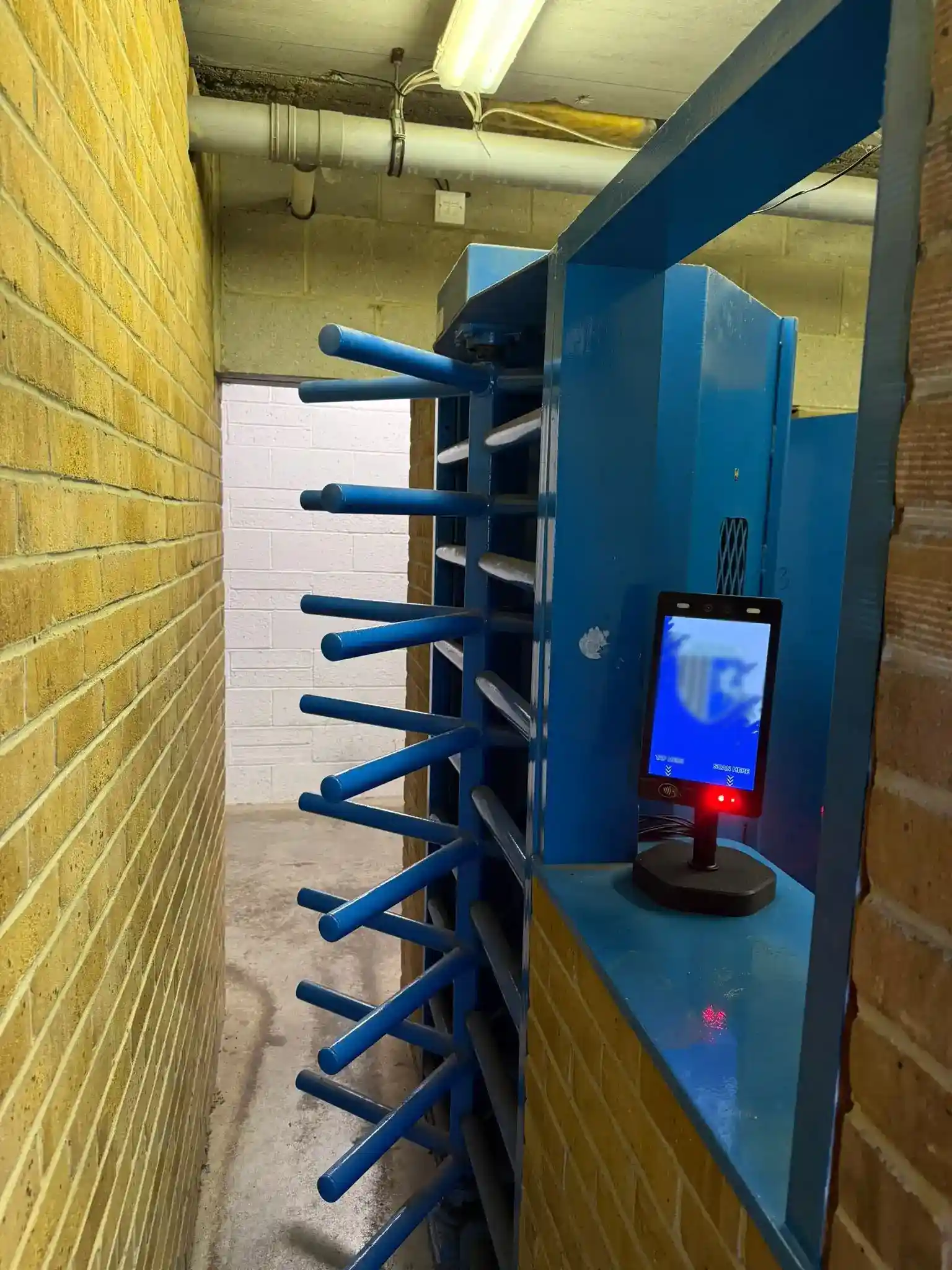
To improve entry performance, Gillingham Football Club deployed the FA8 facial recognition terminal at key entry points and integrated the system into its matchday ticketing workflow.
The system adopted a hybrid verification approach combining facial recognition and QR code scanning:
- Facial recognition as the primary method for fast and contactless entry
- QR code scanning as a fallback option for exception cases
This combination ensured both high efficiency and operational flexibility during peak matchday entry.
How the System Worked
- Ticket purchase → identity linked to ticket
- Spectator approaches entry point
- FA8 performs facial recognition for primary verification
- If needed, QR code scanning is used as a fallback
- Verified spectators proceed through the entry point
Deployment Highlights
- FA8 terminals were deployed at key indoor entry points
- Hybrid verification ensured both speed and reliability
- Continuous recognition supported moving spectators
- Stable performance during evening matches and low-light conditions
- Edge-based processing ensured fast response and stable operation
Key Results of FA8 Implementation
The results of this Gillingham Football Club case were clear after deployment:
- Entry time reduced to 0.2 seconds per person
- Verification accuracy reached 99.99%
- On-site staffing requirements were reduced
- Ticket fraud risk was significantly reduced
Client Feedback
The client’s Technical Director commented: “FA8 is far more accurate than manual verification and extremely fast. A single club can expect to reduce at least 1-2 on-site staff members. And we look forward to more unexpected surprises from FA8 in future operation.”
Before vs. After
| Metric | Before | After |
| Entry time | 5–10 seconds | 0.2 seconds |
| Accuracy | Dependent on staff | 99.99% |
| Staffing | High | Reduced |
| Fraud risk | Present | Significantly reduced |
Why FA8 Was Selected
- Ultra-fast facial recognition with response time as low as 0.2 seconds
- High verification accuracy of up to 99.99%
- Integrated support for both facial recognition and QR verification
- Stable performance in low-light environments
- Industrial-grade reliability for continuous operation
- Easy integration with existing systems via API
Conclusion
This Gillingham Football Club case study demonstrates how the club improved matchday entry operations using the FA8 facial recognition terminal. By combining facial recognition with QR code verification, the club achieved a more efficient, flexible, and stable entry process during peak periods.
相关新闻
-
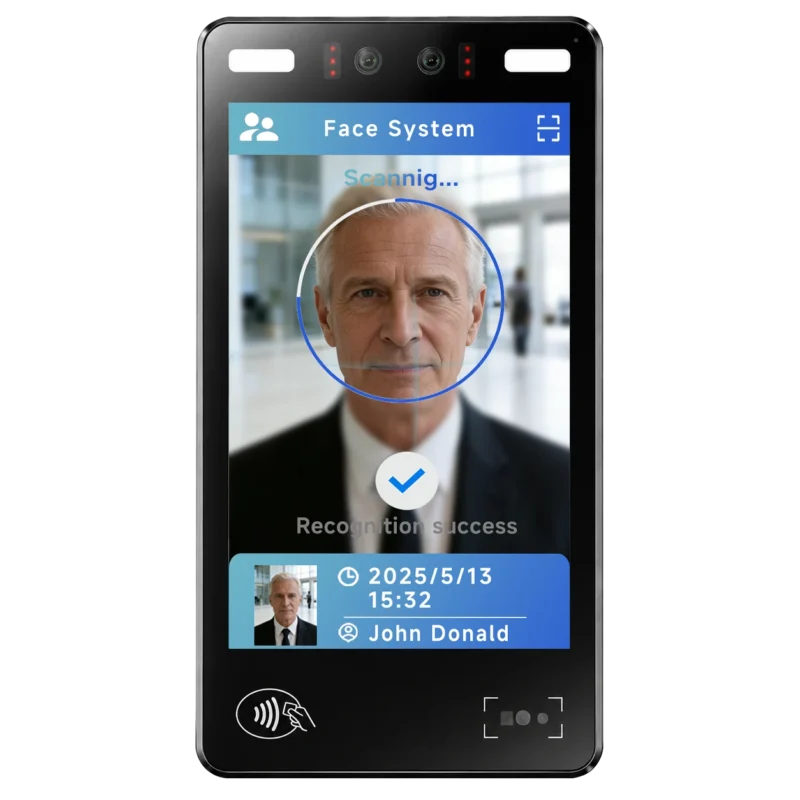
FA10 10.1-Inch AI Facial Recognition Terminal for Smart Access
SUNTEK FA10 10.1-inch AI facial recognition terminal is designed for smart access control, visitor management, attendance, and self-service applicatio…
-
How to Choose the Right POS Terminal: SC1 vs SC2 vs SC6
Selecting the right POS terminal depends on your software requirements, hardware expectations and deployment environment. This guide compares SUNTEK S…
-
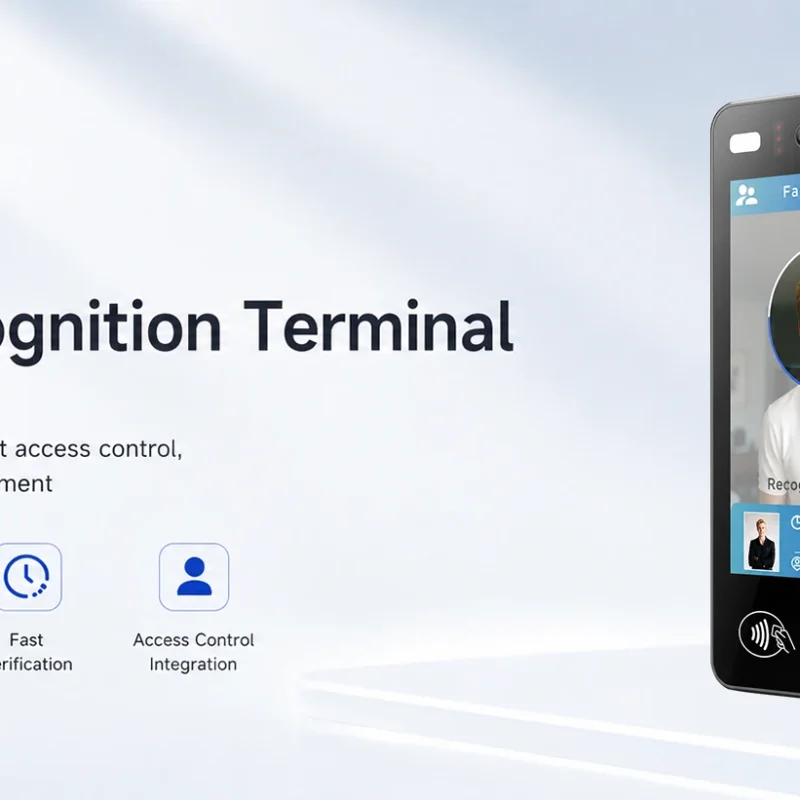
Updated FA8 Facial Recognition Terminal
SUNTEK has updated the FA8 8-inch Android facial recognition terminal with a more refined exterior design, a revised interface configuration, and stro…
-
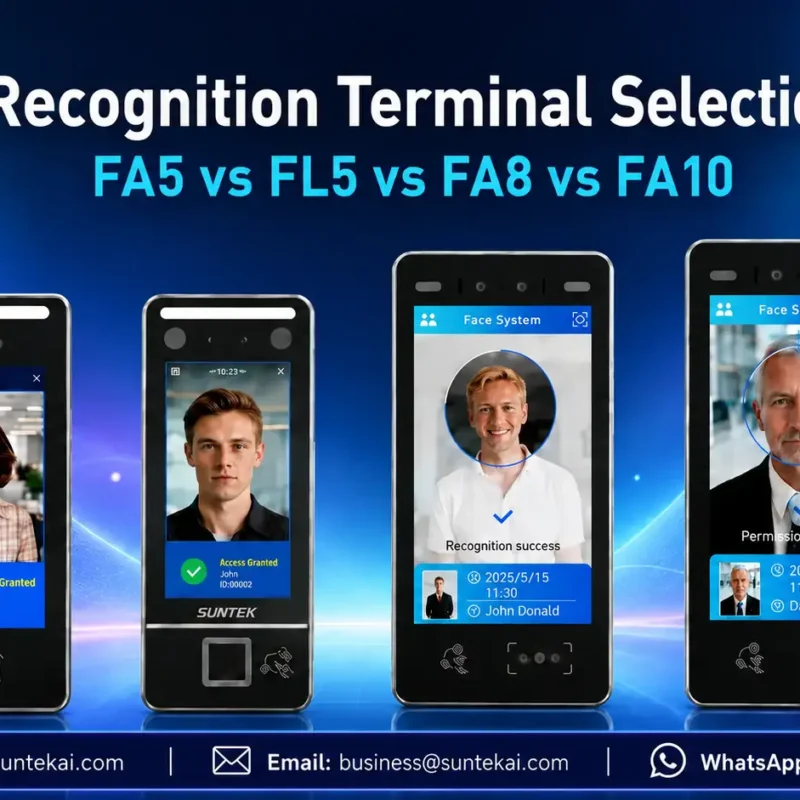
Facial Recognition Terminal Selection Guide: FA5 vs FL5 vs FA8 vs FA10
This guide compares SUNTEK FA5, FL5, FA8, and FA10 to help you choose the right facial recognition terminal for your project. Which SUNTEK Facial Reco…
-
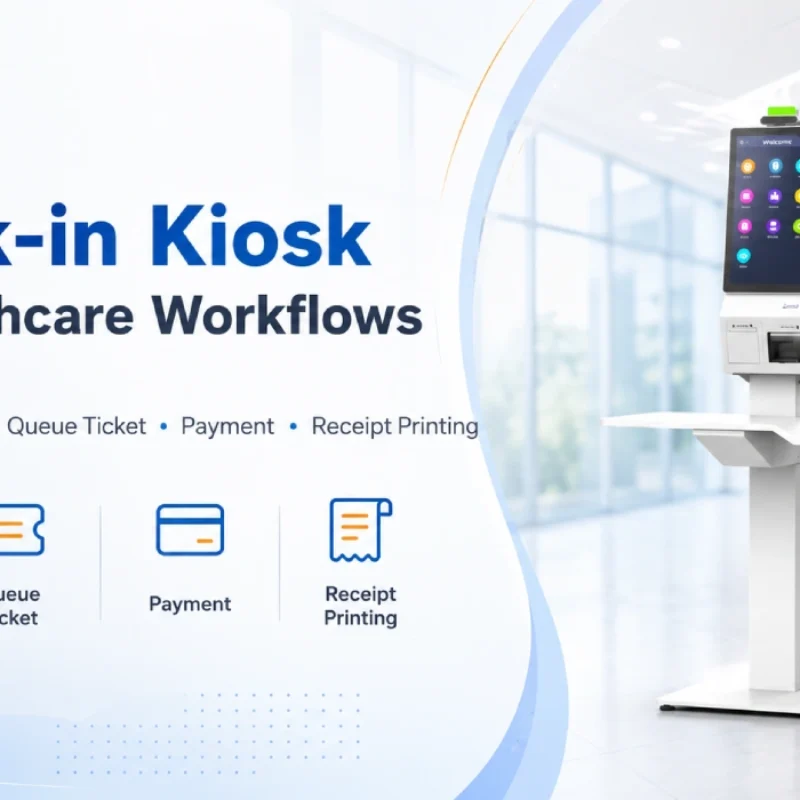
Check-In Kiosk Hardware for Healthcare Self-Service
A check-in kiosk helps healthcare facilities move repetitive front-desk tasks into a guided self-service registration workflow. This article explains how check-in kiosks support appointment confirmation, information entry, queue ticket printing, payment, receipt printing, and optional verification, while also outlining key hardware modules and deployment considerations for hospitals, clinics, and outpatient care centers.
-
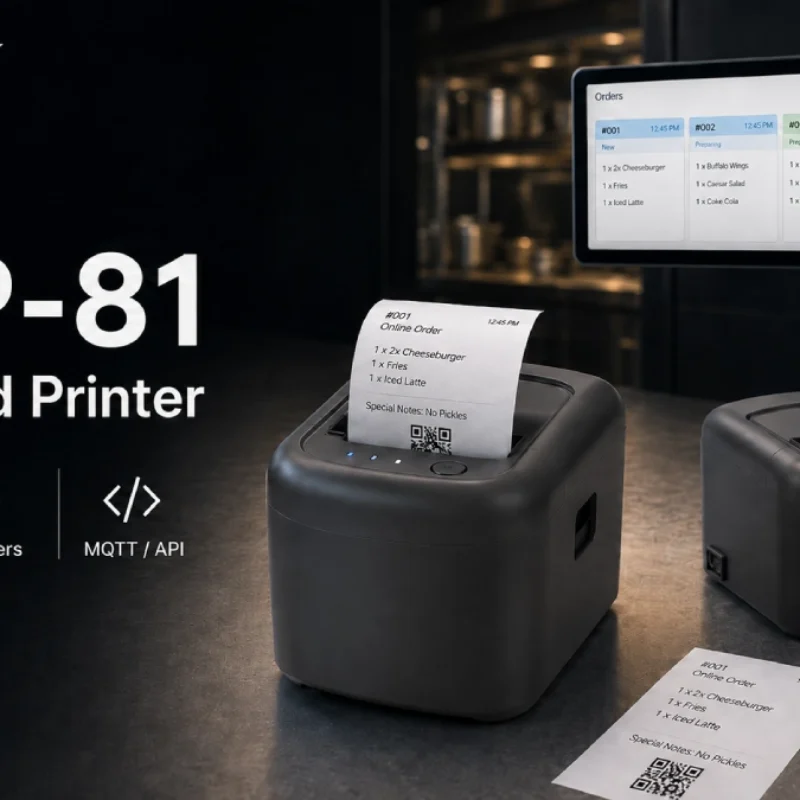
Cloud Printer for Online Food Orders: How Restaurants Keep Delivery Orders Moving
Online food orders are changing how restaurants manage kitchen, packing, and delivery workflows. This article explains how cloud printers and KDS hardware help restaurants print order tickets, improve kitchen visibility, reduce missed orders, and build a more reliable online food order workflow.
-
Compact Self-Service Kiosk for Chain Store Projects
SUNTEK SK1-15 is a compact self-service kiosk designed for chain store projects, solution providers, and system integrators. This article explains how SK1-15 supports POS holder installation, SoftPOS-ready NFC configurations, QR code scanning, magnetic stripe card reader options, face camera support, and external fingerprint module integration for front-counter service, payment, identification, and multi-store rollout workflows.
-
Multimodal Biometrics in Access Control After ID4Africa 2026
This article explores how ID4Africa 2026 reflects the growing importance of multimodal biometrics in access control. It explains why face recognition, fingerprint verification, and palm vein recognition are becoming more relevant for offices, hospitals, schools, government buildings, and secure indoor areas, with SUNTEK FL5 as a hardware example.
-
What NRA Show 2026 Reveals About Restaurant Technology Trends
As NRA Show 2026 opens in Chicago, restaurant operators are paying closer attention to practical technology that improves ordering, payment, kitchen workflows and device management. From SUNTEK’s hardware manufacturer perspective, the key trend is clear: restaurant digitalization is moving from isolated software tools to connected hardware systems, including POS terminals, self-service kiosks, cloud printers, SoftPOS-ready devices and remote management platforms.
-
How to Choose a Self-Service Kiosk: SK1 vs SK1-15 vs SK5
Compare SUNTEK SK1, SK1-15, and SK5 self-service kiosks by installation type, SoftPOS support, information kiosk use, payment, printing, scanning, and project scenarios.