
How Football Clubs Can Improve Entry Systems and Reduce Matchday Queues
Introduction
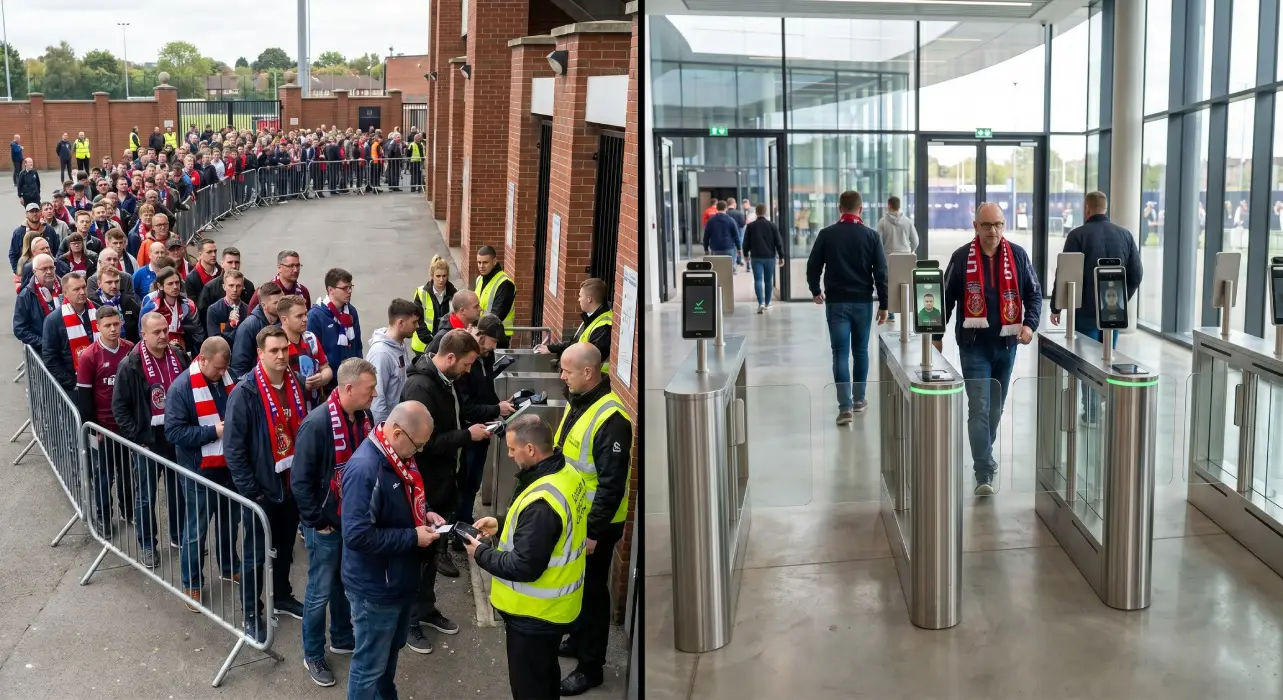
A football club entry system plays a critical role in matchday operations, directly affecting fan experience and overall efficiency. For football clubs, entry is not just an operational task—it is a key part of how supporters experience the event from the very beginning.
As attendance continues to grow, many clubs are rethinking their entry systems and adopting more advanced facial recognition ticketing systems to improve efficiency and reduce congestion.
Supporters often judge the quality of a matchday not only by what happens on the pitch, but also by how smoothly they enter the venue.
Long queues, slow-moving lines, and confusion at entry points can quickly create frustration before the game even begins.
Improving entry efficiency is no longer optional—it is becoming a competitive advantage for clubs.
Why Do Entry Bottlenecks Happen on Matchdays?
Entry congestion on matchdays is rarely caused by a single issue. Instead, it is the result of multiple factors working together:
- Limited gate capacity restricting overall throughput
- Sequential verification processes requiring individual interaction
- Operational dependence on staff coordination and experience
On matchdays, supporter arrival patterns are highly time-compressed, with a significant portion of fans reaching entry points within a limited pre-kickoff window.
This creates sudden pressure on access infrastructure rather than a steady flow of attendees.
Limitations of Traditional Ticket Verification
Traditional ticket verification methods, including manual inspection and QR code scanning, face structural limitations during peak entry periods.
The challenge is not only the time required per person, but also the complexity of the process itself. Staff must verify ticket validity, operate scanning devices, guide supporters, and handle real-time issues such as:
- Poor mobile signal affecting QR code scanning
- Screen brightness or damage impacting readability
- Duplicate or screenshot tickets causing verification failures
- Supporters searching for tickets at the gate
As attendance increases, these limitations make it difficult for clubs to maintain stable throughput and scale their systems effectively.
Can Facial Recognition Improve Entry Efficiency?
Facial recognition technology provides a different approach by replacing multi-step manual verification with automated identity matching.
In modern deployments,ticketing and access control systems combine biometric verification with automated entry processes to deliver consistent performance under high-traffic conditions.
Instead of requiring step-by-step interaction, identity verification is completed automatically as supporters approach the entrance.
- Algorithm layer: Fast and accurate facial matching
- Processing layer: Real-time edge computing
- Imaging layer: Multi-modal cameras for stable performance
- System stability: Continuous operation under high load
A Real Example from a UK Football Club
A professional football club implemented a facial recognition-based entry system to improve matchday efficiency.
- Reduced verification time per person
- Improved entry consistency
- Lower staffing pressure
For a deeper look, explore this football club entry system case.
A Growing Trend Across European Football
Improving entry efficiency has become a priority across European football.
More organizations are adopting structured digital verification and biometric technologies to handle increasing attendance and operational complexity.
These trends are also reflected in broader high-throughput environments, where automated identity verification is becoming standard practice.
Global Events Reinforce the Need for Efficient Entry Systems
Large-scale sporting events highlight the importance of efficient entry systems.
Even small inefficiencies can lead to congestion and safety risks when handling massive crowds within limited time windows.
To address these challenges, organizers increasingly rely on automated verification and biometric technologies.
When Should Football Clubs Upgrade Their Entry Systems?
Football clubs should consider upgrading their entry systems when:
- Attendance exceeds current capacity
- Entry queues impact fan experience
- Staffing costs increase
- Ticket misuse becomes difficult to manage
In these situations, adopting more advanced systems becomes a practical step toward improving matchday operations.
Conclusion
Improving matchday entry is not just about speed—it directly affects fan experience, safety, and operational efficiency.
While traditional systems struggle to scale, modern solutions provide more reliable and automated approaches.
For clubs planning upgrades, adopting a structured facial recognition ticketing system is a key step toward improving overall entry performance.
相关新闻
-
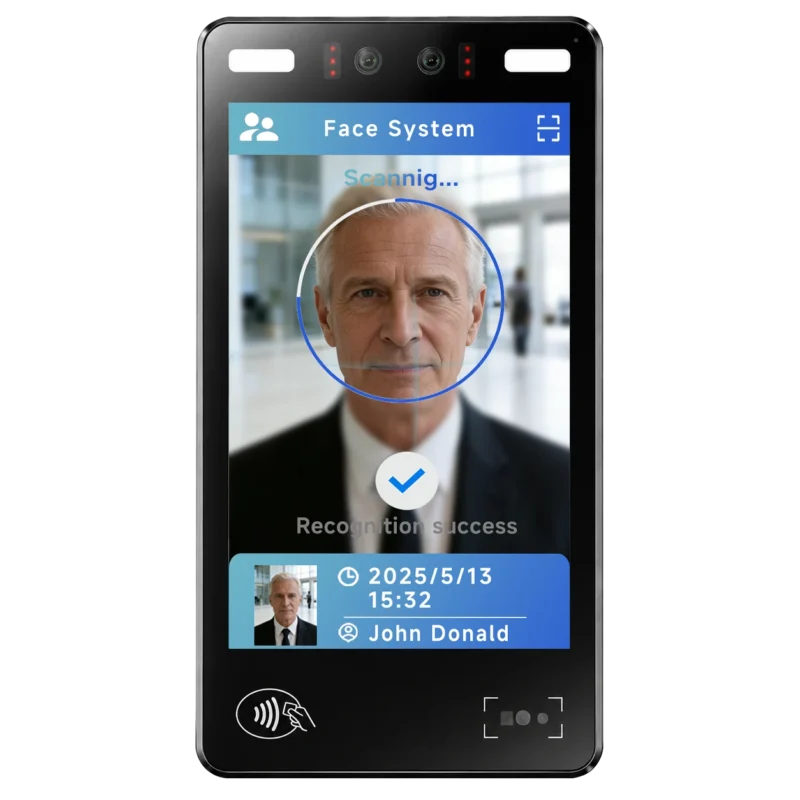
FA10 10.1-Inch AI Facial Recognition Terminal for Smart Access
SUNTEK FA10 10.1-inch AI facial recognition terminal is designed for smart access control, visitor management, attendance, and self-service applicatio…
-
How to Choose the Right POS Terminal: SC1 vs SC2 vs SC6
Selecting the right POS terminal depends on your software requirements, hardware expectations and deployment environment. This guide compares SUNTEK S…
-
Updated FA8 Facial Recognition Terminal
SUNTEK has updated the FA8 8-inch Android facial recognition terminal with a more refined exterior design, a revised interface configuration, and stro…
-
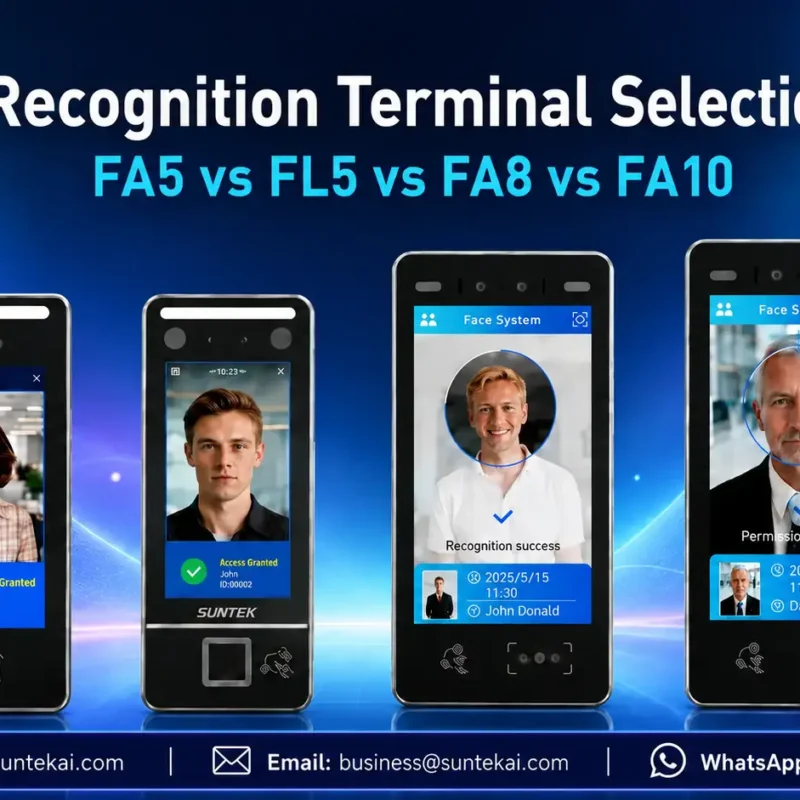
Facial Recognition Terminal Selection Guide: FA5 vs FL5 vs FA8 vs FA10
This guide compares SUNTEK FA5, FL5, FA8, and FA10 to help you choose the right facial recognition terminal for your project. Which SUNTEK Facial Reco…
-
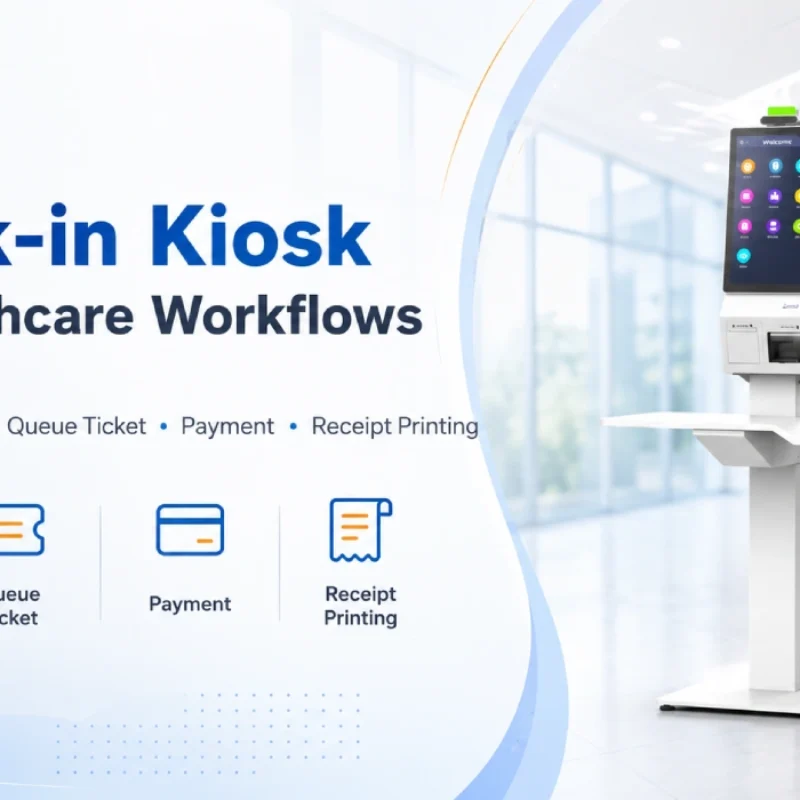
Check-In Kiosk Hardware for Healthcare Self-Service
A check-in kiosk helps healthcare facilities move repetitive front-desk tasks into a guided self-service registration workflow. This article explains how check-in kiosks support appointment confirmation, information entry, queue ticket printing, payment, receipt printing, and optional verification, while also outlining key hardware modules and deployment considerations for hospitals, clinics, and outpatient care centers.
-
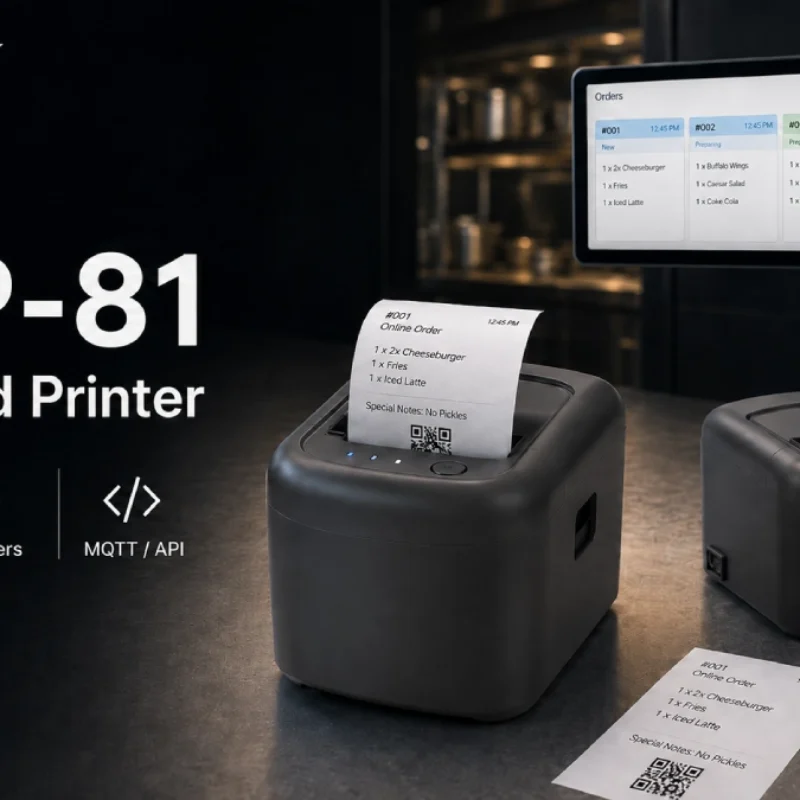
Cloud Printer for Online Food Orders: How Restaurants Keep Delivery Orders Moving
Online food orders are changing how restaurants manage kitchen, packing, and delivery workflows. This article explains how cloud printers and KDS hardware help restaurants print order tickets, improve kitchen visibility, reduce missed orders, and build a more reliable online food order workflow.
-
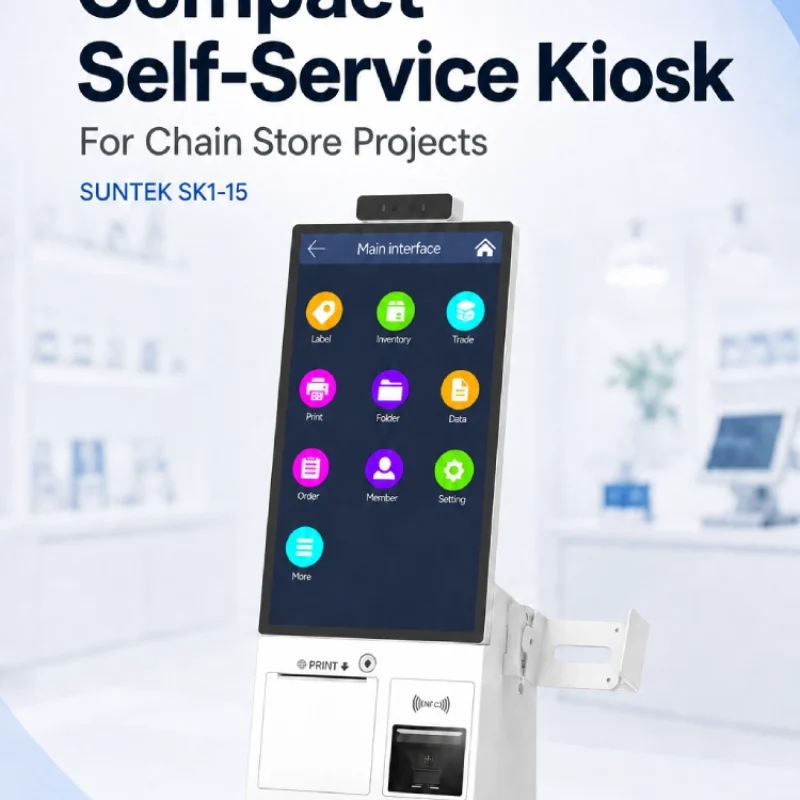
Compact Self-Service Kiosk for Chain Store Projects
SUNTEK SK1-15 is a compact self-service kiosk designed for chain store projects, solution providers, and system integrators. This article explains how SK1-15 supports POS holder installation, SoftPOS-ready NFC configurations, QR code scanning, magnetic stripe card reader options, face camera support, and external fingerprint module integration for front-counter service, payment, identification, and multi-store rollout workflows.
-

Multimodal Biometrics in Access Control After ID4Africa 2026
This article explores how ID4Africa 2026 reflects the growing importance of multimodal biometrics in access control. It explains why face recognition, fingerprint verification, and palm vein recognition are becoming more relevant for offices, hospitals, schools, government buildings, and secure indoor areas, with SUNTEK FL5 as a hardware example.
-

What NRA Show 2026 Reveals About Restaurant Technology Trends
As NRA Show 2026 opens in Chicago, restaurant operators are paying closer attention to practical technology that improves ordering, payment, kitchen workflows and device management. From SUNTEK’s hardware manufacturer perspective, the key trend is clear: restaurant digitalization is moving from isolated software tools to connected hardware systems, including POS terminals, self-service kiosks, cloud printers, SoftPOS-ready devices and remote management platforms.
-
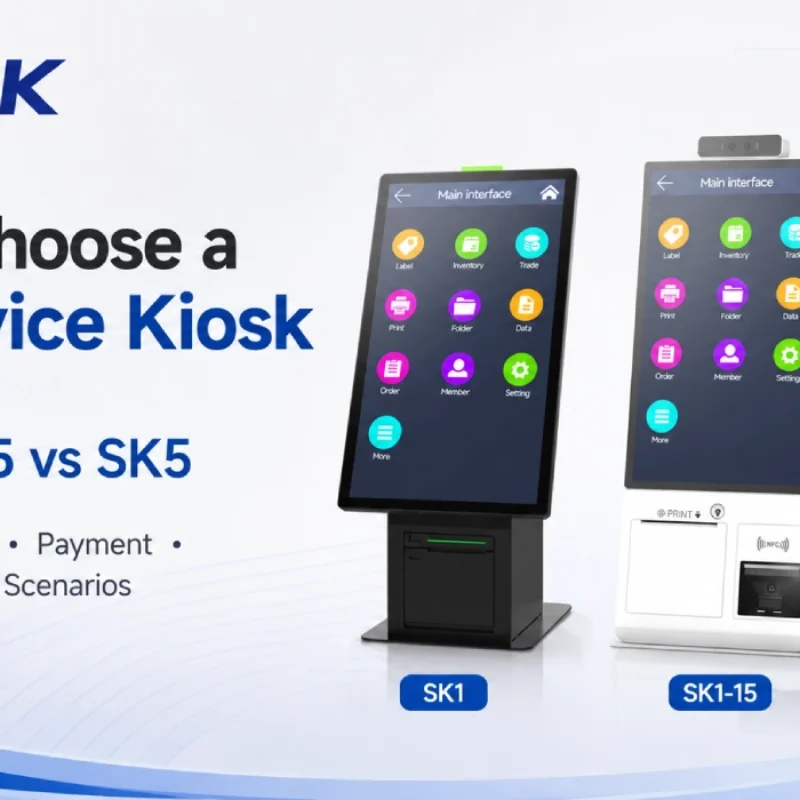
How to Choose a Self-Service Kiosk: SK1 vs SK1-15 vs SK5
Compare SUNTEK SK1, SK1-15, and SK5 self-service kiosks by installation type, SoftPOS support, information kiosk use, payment, printing, scanning, and project scenarios.