
SK7: AI-Ready Modular Kiosk for Next-Gen Restaurant Self-Ordering
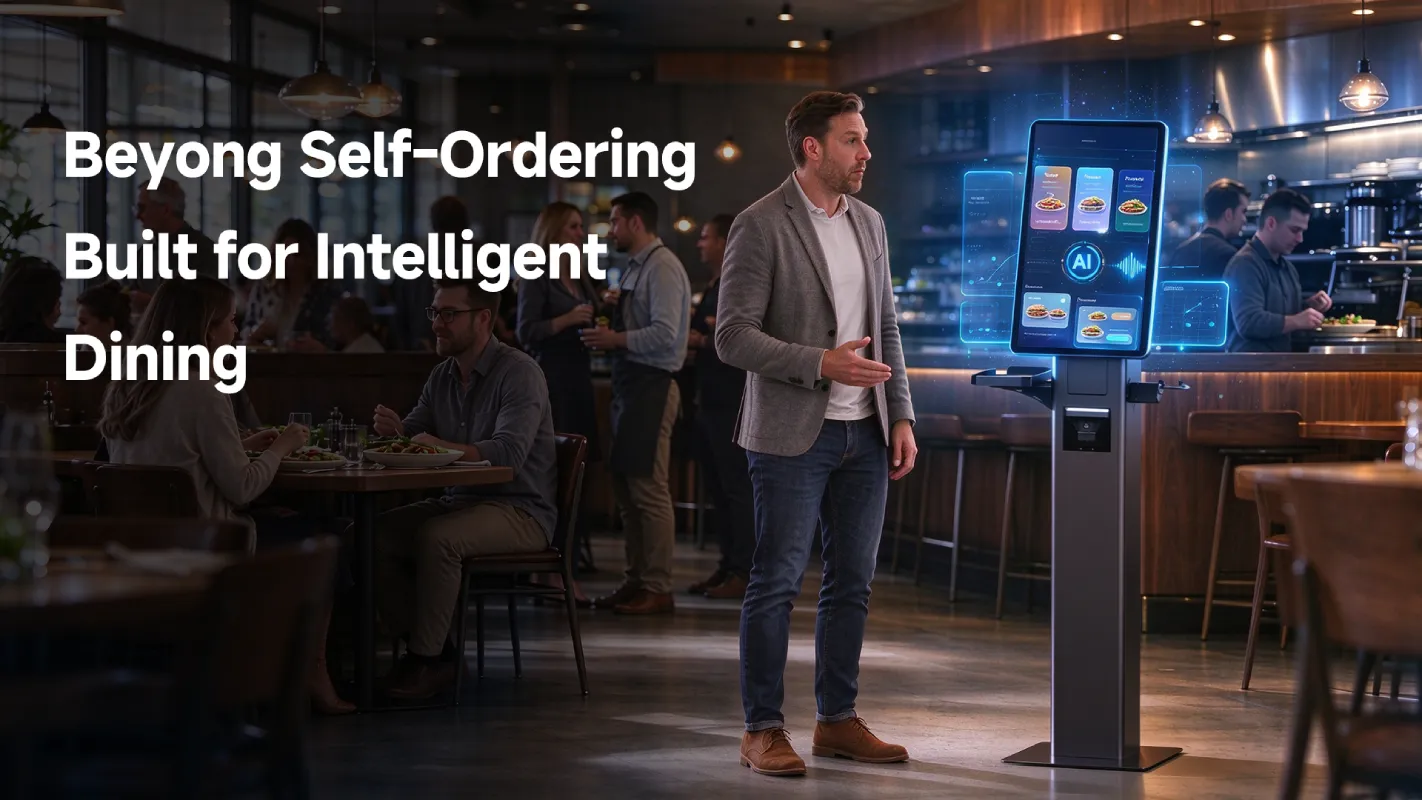
1. Why the Next Generation of Restaurants Needs AI-Ready Kiosk Hardware
Traditional self-ordering kiosks have helped restaurants digitize menus and simplify ordering. But the next generation of restaurant technology is moving toward more intelligent, interactive, and adaptable experiences.
Customers may increasingly interact with kiosks through natural language, receive AI-assisted menu suggestions, or combine touch and voice during ordering. These applications require suitable computing resources and compatible input devices.
The next generation of restaurant kiosks won’t be defined by screen size alone. It will be defined by intelligence, adaptability, and the ability to evolve.
Conventional fixed-configuration kiosks may need additional hardware to accommodate emerging AI applications. An AI-ready modular kiosk offers greater flexibility for future software development, peripheral integration, and long-term deployment.
Traditional Kiosk vs. AI-Ready Modular Kiosk
| Consideration | Conventional Fixed Kiosk | AI-Ready Modular Kiosk |
|---|---|---|
| Computing | Optimized for existing ordering software | Dedicated AI acceleration where supported |
| Interaction | Primarily touchscreen | Touch, voice, and vision with compatible solutions |
| Expansion | Depends on existing ports and configuration | Configurable peripheral modules |
| Future Adaptability | Upgrades may require hardware changes | More options for compatible hardware expansion |
Choosing AI-ready hardware today isn’t about deploying every AI feature immediately. It’s about keeping more possibilities open for tomorrow.
2. AI-Ready Computing for Smarter Restaurant Ordering
An AI-ready self-ordering kiosk is a hardware platform designed to support compatible AI applications through suitable computing resources, input devices, and system integration.
The SUNTEK SK7 Android version runs Android 14 and features a Rockchip RK3576 octa-core processor with a dedicated 6 TOPS Neural Processing Unit (NPU). This provides hardware acceleration for compatible edge AI workloads.
For software developers and restaurant technology providers, this creates opportunities to explore:
- AI Menu Recommendations: Intelligent suggestions based on menu information, customer selections, and application data.
- Voice Ordering & Assistance: Conversational ordering applications using compatible microphones and speech AI software.
- Multilingual Ordering: AI-assisted menu navigation for customers using different languages.
- Computer Vision: Camera-based image recognition and interaction developed with compatible software.
SK7 also supports optional two- or four-microphone arrays and monocular or binocular camera modules. Combined with its 10-point touchscreen, these options provide a hardware foundation for multimodal customer interaction.
The advantage is not a single built-in AI feature, but the flexibility for developers to create different intelligent ordering experiences.
The 6 TOPS NPU is specific to the Android version. AI applications are not preinstalled. Actual functionality depends on compatible software, AI models, peripherals, and system integration.
3. Modular by Design. Ready for What’s Next.
AI computing alone does not make a kiosk future-ready. As restaurant applications evolve, hardware must also support changing peripheral requirements.
SUNTEK SK7 features three USB-based POGO Pin expansion interfaces for compatible modules, including NFC readers, monocular or binocular cameras, MSR readers, barcode scanners, fingerprint readers, and status indicator lights.
Modules connect through POGO Pin contacts and are secured with screws, allowing installation without disassembling the kiosk main body. This enables technology providers to configure different hardware combinations around a consistent platform.
SK7 also integrates a standard 1D/2D barcode scanner and an 80mm thermal printer with automatic cutting and printing speeds up to 160mm/s. Its replaceable printer module supports easier maintenance and compatible customization.
Optional brackets accommodate compatible external payment terminals and other peripherals according to regional and project requirements.
Instead of treating every new requirement as a reason to replace the entire kiosk, modular hardware creates more opportunities for compatible upgrades and customization.
4. Flexible Configurations for Different Restaurant Concepts
From quick-service restaurants (QSRs) and fast-casual dining to coffee shops and food courts, different restaurant concepts require different hardware configurations.
SK7 offers a standard 21.5-inch FHD touchscreen and an optional 27-inch version, both with 500-nit brightness and 10-point touch support.
Portrait and landscape orientations, combined with countertop and floor-standing installation, provide flexibility for different ordering interfaces and restaurant layouts.
Android and Windows configurations allow customers to match hardware with their software requirements. The Android version supports compatible NPU-accelerated AI applications, while SK7W offers configurable Intel processor options for Windows-based systems.
For projects requiring other sizes or installation formats, explore the SUNTEK self-service kiosk product range, including compact countertop, modular, and large-screen hardware options.
5. Building the Next Generation of Intelligent Restaurants
Future-ready hardware is especially valuable for restaurant software developers, AI technology providers, POS solution companies, and system integrators planning long-term deployments.
A restaurant may begin with touchscreen ordering and later explore compatible voice assistance, intelligent menu applications, or additional hardware modules as its technology strategy evolves.
SUNTEK supports these projects through AI-ready Android hardware, modular expansion, Android and Windows platform options, OEM/ODM customization, and peripheral integration. Optional SUNTEK MDM is also available for compatible Android deployments.
SUNTEK supplies the hardware platform and integration support. Ordering software, AI models, and payment applications are developed or integrated by customers and their technology partners.
For broader deployment requirements, explore the SUNTEK Restaurant Self-Ordering Kiosk Hardware Solution.
Frequently Asked Questions
Does SUNTEK SK7 support AI-powered restaurant ordering?
Yes. The SK7 Android version features a Rockchip RK3576 processor with a 6 TOPS NPU for compatible edge AI applications. AI-powered ordering requires customer-developed or third-party software and integration.
Can SK7 hardware be customized for restaurant projects?
Yes. SK7 supports modular peripherals, 21.5-inch and optional 27-inch displays, flexible installation, Android or Windows configurations, and OEM/ODM customization, subject to project requirements.
Build What’s Next with SUNTEK SK7
Choosing AI-ready hardware today is not about predicting every future application. It’s about preparing for the next generation of intelligent restaurant technology.
With AI-ready computing, modular expansion, and flexible configurations, SUNTEK SK7 provides a hardware foundation for evolving restaurant self-ordering solutions.
Beyond Self-Ordering. Built for What’s Next.
Developing an AI-assisted ordering application or a customized restaurant kiosk project? SUNTEK works with software developers, system integrators, and OEM/ODM partners.
Explore SUNTEK SK7 Hardware Features & Specifications →
Contact SUNTEK to discuss sample requests, peripheral integration, and customized hardware requirements.
相关新闻
-
SUNTEK SM6 Launch: GMS-Certified Handheld POS
SUNTEK introduces the SM6 Handheld POS Terminal, a new-generation mobile POS device powered by Android 16 with GMS certification. Featuring dual displ…
-
SUNTEK SC5 Launch | 15.6-inch Flagship Desktop POS with GMS
SUNTEK introduces SC5, its next-generation flagship desktop POS terminal, combining a compact, slim design with flexible displays and connectivity for…
-
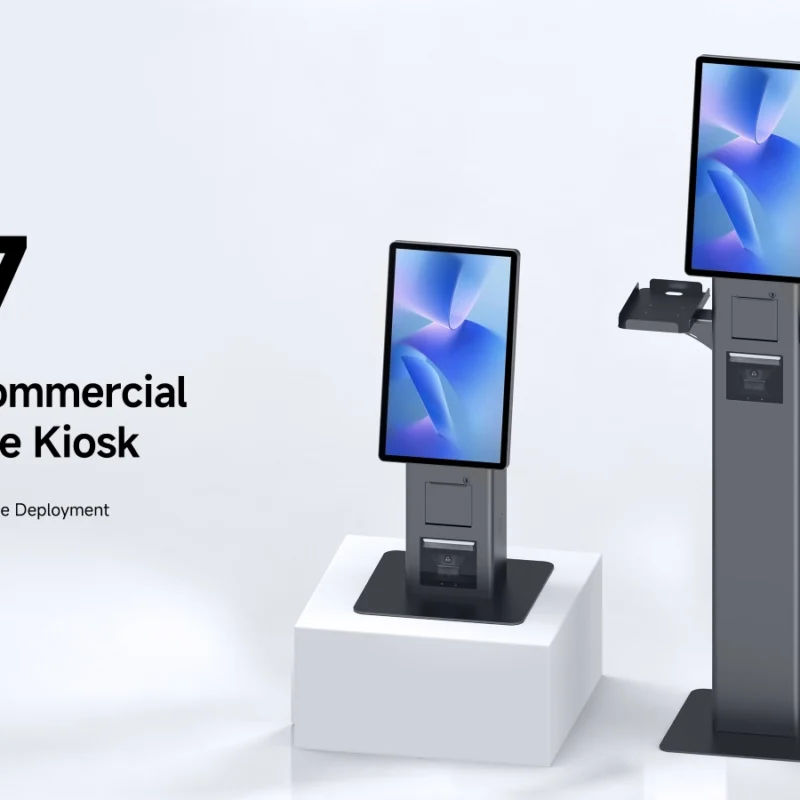
Introducing SUNTEK SK7: Flagship Modular Self-Service Kiosk
SUNTEK introduces the SK7, its new flagship modular self-service kiosk, combining integrated scanning and printing, flexible peripheral expansion, and…
-
FA10 10.1-Inch AI Facial Recognition Terminal for Smart Access
SUNTEK FA10 10.1-inch AI facial recognition terminal is designed for smart access control, visitor management, attendance, and self-service applicatio…
-
How to Choose the Right POS Terminal: SC1 vs SC2 vs SC6
Selecting the right POS terminal depends on your software requirements, hardware expectations and deployment environment. This guide compares SUNTEK S…
-
Updated FA8 Facial Recognition Terminal
SUNTEK has updated the FA8 8-inch Android facial recognition terminal with a more refined exterior design, a revised interface configuration, and stro…
-
Facial Recognition Terminal Selection Guide: FA5 vs FL5 vs FA8 vs FA10
This guide compares SUNTEK FA5, FL5, FA8, and FA10 to help you choose the right facial recognition terminal for your project. Which SUNTEK Facial Reco…
-
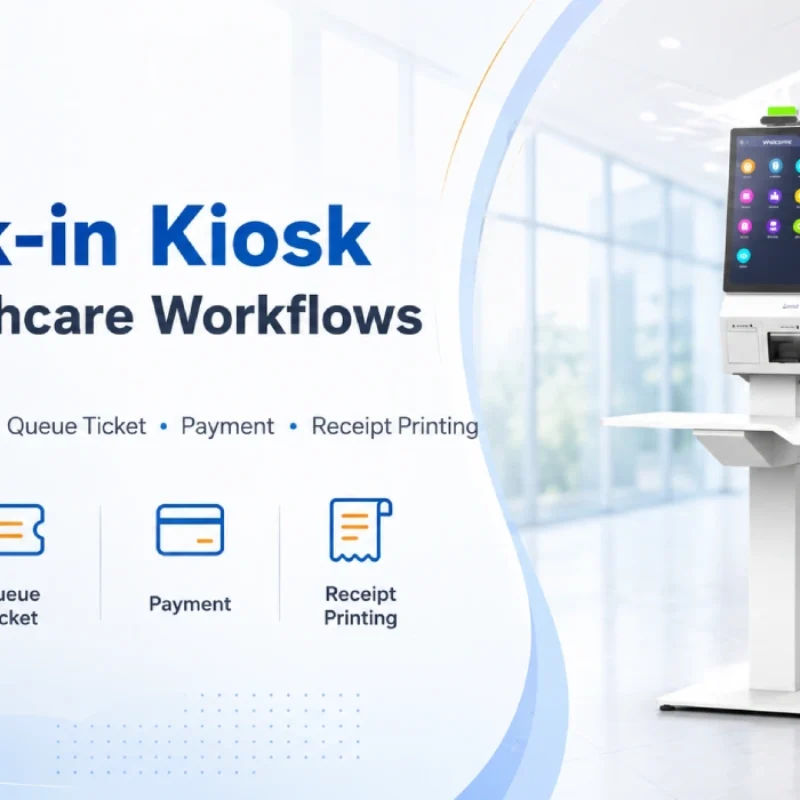
Check-In Kiosk Hardware for Healthcare Self-Service
A check-in kiosk helps healthcare facilities move repetitive front-desk tasks into a guided self-service registration workflow. This article explains how check-in kiosks support appointment confirmation, information entry, queue ticket printing, payment, receipt printing, and optional verification, while also outlining key hardware modules and deployment considerations for hospitals, clinics, and outpatient care centers.
-
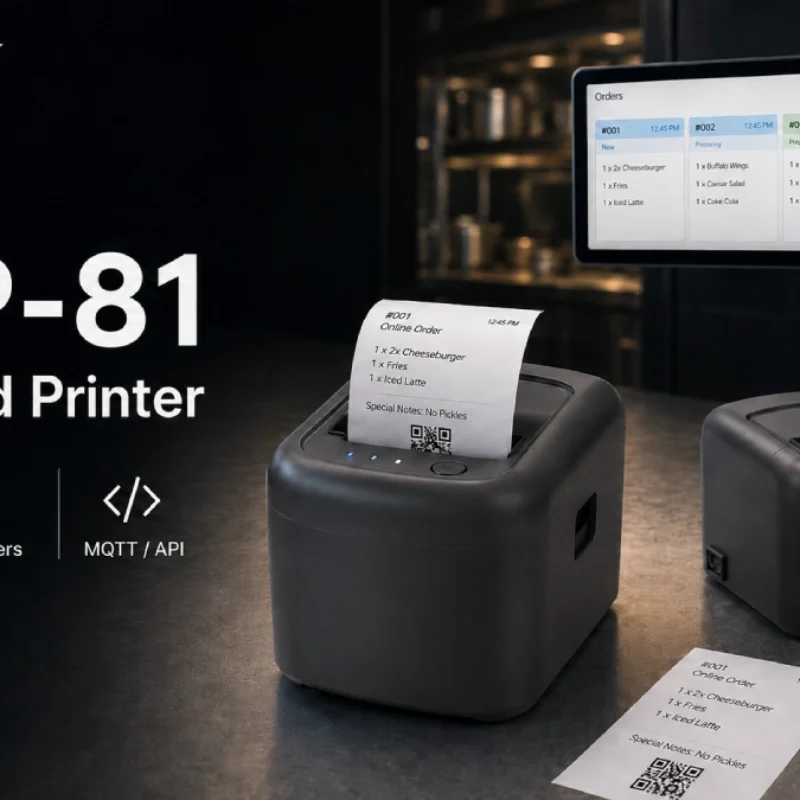
Cloud Printer for Online Food Orders: How Restaurants Keep Delivery Orders Moving
Online food orders are changing how restaurants manage kitchen, packing, and delivery workflows. This article explains how cloud printers and KDS hardware help restaurants print order tickets, improve kitchen visibility, reduce missed orders, and build a more reliable online food order workflow.
-
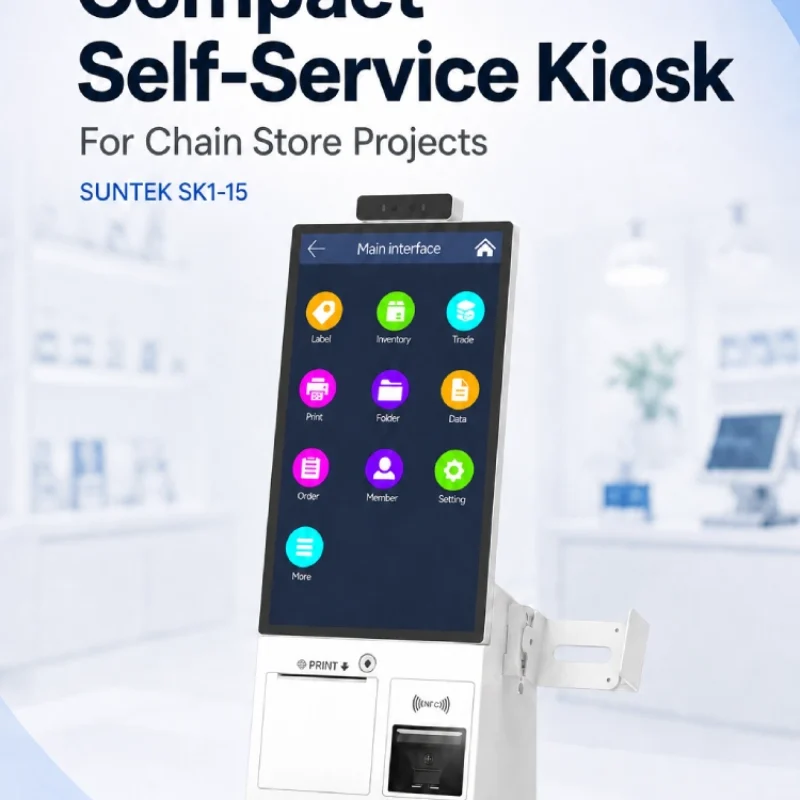
Compact Self-Service Kiosk for Chain Store Projects
SUNTEK SK1-15 is a compact self-service kiosk designed for chain store projects, solution providers, and system integrators. This article explains how SK1-15 supports POS holder installation, SoftPOS-ready NFC configurations, QR code scanning, magnetic stripe card reader options, face camera support, and external fingerprint module integration for front-counter service, payment, identification, and multi-store rollout workflows.